New Year Inspiration: Art, Work and Studio Space

In the wake of such destruction (and bickering over who is more generous and who is less stingy), I have been seeking inspiration from creative spaces and the creative people who inhabit them.


Thanks to my friend, Jeanette, a fiber artist outside Chicago, I have received an dose of motivation in the form of David Seider's book, Artists at Work: Inside the studios of Today's Most Celebrated Artists.


Seidner's photos of dramatic work spaces belonging to his friends, mentors and heros are augmented by his essays on the hard-working artists in the context of their private, creative laboratories.


The studios profiled include modern masters: Cindy Sherman, Chuck Close, Roy Lichtenstein, Richard Serra, Jasper Johns, Francesco Clemente amoung many others others.


Studios by the Sea: Artists of Long Island's East End
is another glorious photogallery of artists' spaces, but the venue has left Manhattan for the weekend for the Hamptons.

[Thanks to Jeanette for introducing me to it, and the Saiia-Shrimplin's for the gift certificate that bought it!]


Showing the truly glorious along with the truly humble, this book by Bob Colacello and Jonathan Becker aptly illuminates the constant Bohemian tension: The compulsive need to flock together with like-minded souls, while craving to carve out a piece of solitude for one to work.


And, most important for us to witness and to understand, whether the individual is tidy as a pharmacist or messy as a trainwreck, all the artists follow a single commandment: "Go to your studio and get to work!"


Speaking of art as work, Milton Glaser has actually written the book on the topic; and, he has earned the right to brag about how much art and work has has done over the last 50 years.


Hugely prolific, Glaser is one of the few true Renaissance men in this country: He is an original intellectual, an inspired teacher, a lover of Italy, as well as a deeply passionate New Yorker by both birth and training. Milton Glaser was a driving influence of the visual language of the 60's and 70's.


Along with contemporaries Peter Max, Red Grooms and Seymour Chwast, Glaser is one of my personal heros in bringing joy and discipline to every project.


Whether Glaser is redesigning a restaurant interior, creating the ultimate logo for a new beer or for NYC itself, laboring upon a series of illustrations inspired by Dante's inferno, or composing a poster for Shakespeare in the Park, his love of color, shape and metaphor weave through his entire body of work.

peterdurand

Peter Durand is an artist, educator & visual facilitator based in Houston, Texas.

He is the founder of Alphachimp LLC, a visual facilitation company that helps clients understand and communicate complex systems visually. He is a leader in graphic facilitation and a professor at Northwestern University Pritzker School of Law.

Facilitation Processes in Disaster Recovery


Click for enlargement.


Model by Peter Durand, Alphachimp Studio, Inc.

[based on the Stages of an Enterprise Model by MG Taylor].

This content is from a seminar facilitated by Lenny Diamond, Maria Begona Rodas Carrillo and Deb Starzynski at the International Association of Facilitators Conference, Saturday May 26, 2002, in Fort Worth, Texas


1. Normal State

Basic Need:Stability and growth

Activity: Aspire

Life with its ups and downs, minor glitches and lessons learned.


2. Traumatic Event

Whether an individual or a community, the pattern of life is radically disrupted. This inspires various immediate reactions: denial, sadness, anger, despair, fear, guilt, blame, violence, depression, somatic symptoms, relational stress, spiritual distortions, etc. Every crisis demands a decision be made-- whether to address the trauma using functional strategies or dysfunctional strategies.


Almost immediately after the traumatic event, people start to make an assessment of the situation and accept (or not) the reality of it. A set of symptoms generally develop and are part of the initial reaction. These are all very normal and necessary within the context of the traumatic experience, although in other contexts they may be seen as pathological. They should never be considered as such as they are all important aspects of the process of grieving and, eventual recovery.

The initial reactions appear in a different way in every one of the human dimensions.


We live in a system; yet, we all have different personal and communal subsystems that react to crisis.


A set of symptoms develop which are part of this initial reaction. These symptomsoccur in the four different personal dimensions, often in a combination of two or more:

  • Physical Reactions

  • Mental Reactions

  • Social Reactions

  • Spiritual Reactions


  • It is important to facilitate growth in each dimension. These are normal reactions and don�t have anything to do with psychologicalillnesses and it is the best moment to intervene in the grief process.


    Physical Reactions:

  • Somatic reactions

  • Alteration of sleep patterns

  • Alteration of eating habits

  • Changes in appearance


  • Mental or Emotional Reactions:

  • Nervousness

  • Animic extremes

  • Perceptual distortion

  • Inadequate use of money and objects

  • Loss of desire to live

  • Emotional excesses


  • Sadness: There is a deep and recurring sense of loss during a sometimes long period of time. To cry is normal, natural and even necessary in an intense period of sadness.


    Anger. As illogical as it may be, it is also normal and natural to feel anger and even rage with:

  • Nature

  • Government and/or International Community

  • Family

  • Friends

  • Volunteers

  • Even with God!


  • Fear. Different kinds of fear appear and reappear:

  • Of another crisis

  • Of not being able to survive

  • Of financial loss

  • Of the consequences of these on others


    Guilt or Self-Blame.Many feel guilty for something they did; others feel guilty for what they think they failed to do; some even blame themselves in some way for natural tragedies.


    Social Reactions. Group and interpersonal relationships also feel the impact:

  • Scapegoating, ethnic tension and revenge

  • Mob rule, gang violence or chaos

  • Political repression and/or human rights violations


  • Relational Stress. A crisis affects all relationships, whether between family members or political groups. It is most often seen in individual behaviors of abberent aggressiveness or crippling passivity.


    Spiritual Reactions. Influenced by the need to comprehend the shocking new reality (and both it's source and meaningthere may be an increase in magic thinking and mysticism; some may proclaim the crisis as a punishment for past sins. The pain may drive others away from there belief systems and faith, leading to spiritual rejection, distortion or fanaticism.


    3. Reactive Stage

    Basic Need: Survival

    Activity: Accommodate

    Physical, mental, social and spiritual survival. Grief, fear and numbness rule decision-making.


    Dysfunctional strategies are pseudosolutions. Cycles of self-destructive behavior can result from a failure to recognize crisis as a normal, natural and necessary aspect of human life. Can spiral resulting in a secondary crisis.


    Paul Watzlawick (1989) was the first to introduce the concept of "pseudo-solution:


    "...a difficulty turned into a more serious problem by the use of a solution that is more dangerous than the initial difficulty that is trying to be resolved."


    Pseudosolutions (Watslawick, 1984) are what we do, with the best of intentions, when we try to solve a problem with a strategy that ends up making it worse. These dysfunctional strategies are the �danger� in a crisis.

    It�s like drinking salt water when your thirsty.


    4. Receptive Stage

    Basic Need: Security

    Activity: Assimilate

    Acceptance of the new reality through awareness and reflection, pave the way for adaptation to conditions. An improved attitude reveals a "light at the end of the tunnel." Analysis and observation provide the basic elements for crafting a strategy for recovery.


    5. Proactive Stage

    Basic Need: Autonomy

    Activity: Activate

    The use of functional strategies lead to personal and group psycho-social recuperation and reconstruction. Ownership of growth and improvement through active participation, flexibility and accountability yield greater and greater achievements.


    In this stage, the silent enemy to recovery usually manifests in the form of post-traumatic stress syndrome. Though an illusion of "normalcy" may return, unresolved emotions from the traumatic event undermine steps towards true transcendence. Self-destructive behavior such as depression, isolation and violence are common.


    6. Interactive Stage

    Basic Need: Transcendence

    Activity: Associate

    Strengthen social bonds and intimacy through affiliation and alliances. A social system based on sharing and cooperation. A healthy balance between personal advocacy and group solidarity.


    More Resources

  • More materials from this seminar available from www.iaf-world.org/ManDis.htm

  • International Federation of Red Cross and Red Cresent Societies

    www.ifrc.org

  • The Fritz Institute strengthens the infrastructures of humanitarian relief organizations by mobilizing logistics and technology expertise and resources from the corporate and academic communities.

    www.fritzinstitute.org

  • peterdurand

    Peter Durand is an artist, educator & visual facilitator based in Houston, Texas.

    He is the founder of Alphachimp LLC, a visual facilitation company that helps clients understand and communicate complex systems visually. He is a leader in graphic facilitation and a professor at Northwestern University Pritzker School of Law.

    All Tragedy is Local. The Scale is Global.


    Minutes after the tsunami hit, my uncle, an American engineer who works and travels in Southeast Asia, received a text message from a friend vacationing in Phuket, Thailand:

    "Water is everywhere. Bodies floating everywhere you look. Next wave due in 10 minutes. Trying to get to higher ground. If we don't make and you never see me again, remember...I love ya man."


    The raw footage at Reuters shows how unable the victims were to understand the scope; Thai police video of bikini-clad tourists literally sauntering to outpace what seemed to be an aberently swift tide.


    The scale of this tragedy is the closest to what we imagine in our worst science fiction. No warning. No dark cloud. Nowhere to run. No way to wrap our heads around the sheer longitude of destruction wrought by such a vast, seeping sea.


    Sumatra��once an name I equated with spices and sultry Indonesian intrigue��is an island of despair.


    Irony follows tragedy as Sri Lanka, along with other nations with long-standing civil wars, faces the aftermath and complications of the disaster, including landmines.

    �Mines were floated by the floods and washed out of known mine fields, so now we don't know where they are, and the warning signs on mined areas have been swept away or destroyed,� UNICEF's Ted Chaiban said from the agency's office in Colombo in a statement released at UN headquarters in New York. ~ via The Australian


    To help get a sense of the geological scale of the tsunami, DigitalGlobe has posted multiple satellite images��including before and after photos��of several affected coastal regions.


    For those dumbfounded on-lookers [like me and the US Government] in contributing our resources towards the largest relief effort in world history, there are several methods to make donations. It is important to remember, as the Center for International Disaster Information phrases it in it's Frequently Asked Questions, CASH DONATIONS ARE BEST.

    Your generosity is deeply appreciated, but from years of experience with hundreds of disasters we have learned that cash contributions are by far the most useful response. Financial contributions allow professional relief organizations to purchase exactly what disaster victims need most urgently and to pay for the transportation necessary to distribute those supplies.


    By purchasing exactly what is needed, relief agencies can avoid the oversupply of what is not needed and the purchase of those urgently needed commodities which might be in short supply. Unlike in-kind donations, cash donations entail no transportation cost. In addition, cash donations allow relief supplies to be purchased at locations as near to the disaster site as possible.


    This approach has the triple advantage of stimulating local economies (providing employment, generating cash flow), ensuring that supplies arrive as quickly as possible and reducing transport and storage costs. Cash contributions also allow for the purchase of food, clothing, and other items that are culturally appropriate. Cash contributions to established legitimate relief agencies are always considerably more beneficial than the donation of commodities.


    LINKS

    Center for International Disaster Information

    http://www.cidi.org/incident/tsunami/


    The South-East Asia Earthquake and Tsunami

    The SEA-EAT blog for short. News and information about resources, aid, donations and volunteer efforts.

    http://tsunamihelp.blogspot.com/


    And much more at www.worldchanging.com.

    peterdurand

    Peter Durand is an artist, educator & visual facilitator based in Houston, Texas.

    He is the founder of Alphachimp LLC, a visual facilitation company that helps clients understand and communicate complex systems visually. He is a leader in graphic facilitation and a professor at Northwestern University Pritzker School of Law.

    Designing for Demining

    MIT is offering one of the more intriguing design courses, Humanitarian Demining, course listing SP.776 .


    Humanitarian Demining is the process of detecting, removing and disposing of landmines. Millions of landmines are buried in more than 80 countries resulting in 20,000 civilian victims every year. The course is described as follows:


    Landmines left over from conflicts maim or kill tens of thousands of civilians every year in over seventy countries. In this hands-on class, students learn about humanitarian demining and then design and build a device to aid the demining community. There is a field trip to an army base to expose the students to authentic demining training. Guest speakers who are active in the field enhance the study of de-mining. In previous years, students have worked on probes, clippers, metal detectors, shields, flails and grapples. According to one deminer, the MIT Demining Class is the only student-based group to have successfully invented and launched a tool into widespread use in the field.


    For more information contact Ben Linder, blinder@mit.edu.


    This could be one of the more sober design issues I could imagine. The effects of land mines echo throughout communities around the globe. And those mines, often costing less than $10 to deploy, kill and maim for decades afterwards.


    One recent innovator in the field is a Japanese man who was shocked by victims of landmines during a visit to Cambodia ten years ago. He developed an effective machine to remove landmines. Mr. Amemiya's company converted mechanical digger by adapting Hitachi Construction's hydraulic excavator. He put a drum bristling with blades in place of the bucket on the hydraulic arm and strengthening the cab against blasts.


    The most difficult part was creating steel `teeth' that could resist the 1,000-degree heat from a mine explosion. It took his team four to five years to make the strong cutters.


    Biological Demining Tools (from worldchanging.com):

    A couple of solutions that draw on the effective methods inherit in nature, including rats(!?)and land mine detecting flowers.


    Reuters reports that the Danish company Aresa Biodetection has developed genetically-modified flowers which change color when their roots come in contact with Nitrogen Dioxide in the soil. Explosives used in mines produce NO2 as the chemicals gradually decay.


    DC Comics published this comic book
    in cooperation with the US Department of Defense and UNICEF to raise awareness of the threat facing children in Bosnia.


    LANDMINE LINKS


    E-MINE: The Electronic Mine Information Network

    http://www.mineaction.org/


    The International Mine Action Standards (IMAS) are now the standards in force for all UN mine action operations.

    http://www.mineactionstandards.org/


    International Campaign to Ban Landmines

    http://www.icbl.org/


    The Nairobi Summit on a Mine-Free World - or first Review Conference of the 1997 Mine Ban Treaty - took place from 29 November to 3 December 2004 in Nairobi, Kenya.

    http://www.icbl.org/treaty/meetings/nairobisummit


    peterdurand

    Peter Durand is an artist, educator & visual facilitator based in Houston, Texas.

    He is the founder of Alphachimp LLC, a visual facilitation company that helps clients understand and communicate complex systems visually. He is a leader in graphic facilitation and a professor at Northwestern University Pritzker School of Law.

    Bonfires with ID Fuel

    ID Fuel (www.idfuel.com) is one great site where product ideation meets communal on-line design. This summer they initiated their designers' challenge, known as a Bonfire, around the notion of improving the airline travel experience, themed as Hassle Free Travel.


    ABOVE: The winning entry from Nathan Lynch & Lea Miller, Florida, USA


    The juried winners were truly inspired, and included:


  • Smart Luggage Tag, a Bluetooth luggage tag that communicates with your cell phone.

  • Garment classification system, which addresses the anxiety felt waiting in sluggish lines by arming every citizen with a way to determine beforehand whether or not they are going to cause the dreaded beep.

  • RFID Item and Child Management, RFID devices that, if separated more than twelve feet from the base receiver, sound an alarm to notify the user.

  • Fun Personal Rocker for entertainment while standing in security lines,

  • Security Checkpoint Re-design that places metal and explosive detection pads discreetly so as to minimize physical and visual distress to passengers going through security.

  • Airline Art Museum that turn terminals into independant art galleries which sponsor works from the community, and raise funds through sale of the art.

  • Searchable Wrapping Paper a new kind of elastic, velcro-closeable, re-usable wrapping for gifts that could be applied after you want through security.


    The current Bonfire aims to address and innovate new-tech closures, from buttons and Mason Jars, to zippers and zip-closure bags for Clip-n-Seal It! Entries due January 15.


    Thanks to the founders and editors at ID Fuel, Dominic, Elliott, Beth, Craig and Willy!

  • peterdurand

    Peter Durand is an artist, educator & visual facilitator based in Houston, Texas.

    He is the founder of Alphachimp LLC, a visual facilitation company that helps clients understand and communicate complex systems visually. He is a leader in graphic facilitation and a professor at Northwestern University Pritzker School of Law.

    R U a Pro-Am, 2?

    If you aren't one already, then you know one. Or, you've most likely been cornered by one at a party. We're talking the Pro-Am. No, Pro-Am is not a soon-to-be-bankrupt low fare airline.


    Instead, the term connotes a person who is in actuality an amateur, but in technical execution performs at a professional level, the Professional-Amateur.


    The Pro-Am knows all the stats. They care about the details. And, they want you to care too. The subject could be anything: grass roots politics, WW II airplanes, relational databases, horses, race cars, conspiracy theories.


    What is consistent is the Pro-Am's all-consuming, spittle-in-the-corner-of-the-mouth, infinitely burning passion for their subject and their intense attention to detail.


    It is the kind of dedication one finds in the high school AV club.


    ABOVE:Jason Schwartzman plays the quinessential Pro-Am in Touchstone's Rushmore - 1998


    Yes, think back to high school. Think back to history class and to the gentlemen farmers of the 18th century who founded the United States: Jefferson, Franklin, Hamilton, and that lot.


    These fellows were the original Pro-Ams of the day. They operated farms and businesses, while dedicating personal time and resources to engineer new tools of commercial productivity, to rejigger monetary and economic systems, to unravel philosophical and religious conundrums. And, I am certain, they frustrated their spouses by running off to conferences to haggle and debate the arcane and the innovative. ("But Martha, honey, me and the boys are busy founding a new nation!")


    On top of that, they didn't even have laptops, wireless DSL or blogging software.


    Of course, back in the day, it helped to free up some time in owning slaves and servants to address the more quotidian aspects of staying dressed and fed. This carved out a bit of time to dabble in constitutional law or lobby the French for guns and protection from King George.


    So.


    Were the Founding Brothers amateurs or professionals? Of course that was the good ole anything goes Age of Enlightenment period of Western Civ, when everybody got to do everything.


    What happened once the steam engine, the spreadsheet, the timeclock and Harvard Business School came on the scene?


    Charles Leadbetter, former journalist for the Financial Times, describes the century proceeding our current one as such:


    "The twentieth century was shaped by the rise of professionals in most walks of life. From education, science and medicine, to banking, business and sports, formerly amateur activities became more organised, and knowledge and procedures were codified and regulated. As professionalism grew, often with hierarchical organisations and formal systems for accrediting knowledge, so amateurs came to be seen as second-rate. Amateurism came to be to a term of derision. Professionalism was a mark of seriousness and high standards."


    As the professional classification swiftly subsumed most fields, a rift widened between profit and passion, between legitimacy and love of craft. The worst thing to happen to the Arts in the 20th century is graduate school. Seriousness and standards? Putting the "professional" tag next to the "artist" label leads to stiff necks, padded resumes, ennui and thinking the world owes you a living!


    Now, every amateur, caffeine-addled writer, hacker, designer, artist, activist or social entrepreneur knows that the real juice is not in the pedigree of the hound, but in the thrill of the hunt.


    And, it's the amateurs who are hunters of the most passionate variety.


    It's why suits and goatees don't mix. Like NASA vs. NASCAR. Witness (amateur) geeks like me staying up way past bedtime trying to figure out this blogging phenomenon and Real Simple Syndication, when we should be doing something useful like sleeping or thinking about ways to convince the Powers That Be to forgive Third World debt.


    Expanding on his "Amateur Revolution" essay in the October issue of Fast Company, Leadbetter and researcher Paul Miller have published The Pro-Am Revolution, a PDF book that you can download online for free or a hardcopy you can purchase outright.


    Excerpt:

    "[I]n the last two decades a new breed of amateur has emerged: the Pro-Am, amateurs who work to professional standards. These are not the gentlemanly amateurs of old � George Orwell�s blimpocracy, the men in blazers who sustained amateur cricket and athletics clubs. The Pro-Ams are knowledgeable, educated, committed and networked, by new technology. The twentieth century was shaped by large hierarchical organisations with professionals at the top. Pro-Ams are creating new, distributed organisational models that will be innovative, adaptive and low-cost."


    I mean, honestly, wouldn't you like to have your own entry in Wikipedia top that of Benjamin Franklin's own Pro-Am resume? He is described as "a journalist, publisher, author, philanthropist, abolitionist, public servant, scientist, librarian, diplomat, and inventor."


    Plus, the man knew how to party. (Check out the album Ben Franklin in Paris)


    [Pro-Am via The Fast Company Weblog]

    peterdurand

    Peter Durand is an artist, educator & visual facilitator based in Houston, Texas.

    He is the founder of Alphachimp LLC, a visual facilitation company that helps clients understand and communicate complex systems visually. He is a leader in graphic facilitation and a professor at Northwestern University Pritzker School of Law.

    The Harlequin Globeplotter


    When I was a kid, it seemed that Ronald Reagan was our perma-president... his voice always steadfast and grandfatherly, his vigilance always creasing his brow, his hair always black and cuniformed, a 1940s comma. President Reagan was made of Teflon, we shall note.


    Back then (the '80's that is), "red states" referred not to the majority party in charge of the legislative and executive branches of the American government, but to the vast, sprawling area of Soviet influence, known as Behind the Iron Curtain.


    It is Nancy Reagan, in the end, who is credited with ensuring that red would become associated with the vigor of the Party of Lincoln.


    A fantastic re-interpretation of the globe by artist, Ingo Gunther, showcases oodles of globes showing the planet in various states of dissolution, decay, and demographic duress.


    See his fine assortment of globes, at www.worldprocessor.com in process since 1988 [the first post-Ronnie year, by the way].


    You can navigate these colorful and daunting gems by number, title or visual.


    [via Andrew Zolli]


    Titles of globes in Gunther's oeuvre:


    [1][TV OWNERSHIP]

    [2][NUCLEAR DESIRE]

    [7][LANDLOCKED NATIONS]

    [8][LIFE EXPECTANCY]

    [9][CRISIS ZONES]

    [10][CHINESE GEOGRAPHY]

    [11][STATISTICAL CHALLENGES]

    [11.1][STATISTICAL CHALLENGES]

    [11.4][STATISTICAL CHALLENGES]

    [12][JAPAN VS THE 62 POOREST COUNTRIES]

    [13][POPULATION VOLuME]

    [14][NAMELESS PLACES]

    [15][LOCAL CONDITIONS]

    [16][17TH CENTURY WORLD]

    [17][1949 WORLD]

    [18][BLANK]

    [19][REFUGEE CURRENTS]

    [22][MOUNTAINS OF DEBT]

    [23][GOLD]

    [24][WHITE WORLD]

    [25][RED OCEAN]

    [26][BLACK OCEAN]

    [27][YELLOW OCEAN]

    [30][CO2 SPIRAL]

    [31][POLLUTION]

    [32][LACK OF DETAIL]

    [33][INTERNATIONAL DATA]

    [34][BLACK AFRICA, ETC.]

    [35][NOT AN ARAB WORLD]

    [36][OIL SUPPLY ROUTES]

    [36.1][OIL SUPPLY ROUTES]

    [37][COMPREHENSIVE GUIDE TO THE WORLD]

    [38][PREFERRED CONTINENTAL DRIFT]

    [40][TRAVEL SOUVENIRS]

    [43][[POPULATION BUBBLE]

    [44][REFUGEE POPULATIONS]

    [45][WITTGENSTEIN'S WORLD]

    [46][POLITICAL PRISONERS]

    [48][COMBAT EXPERIENCE]

    [50][MILITARY BUDGETS]

    [51][POSITIONS OF NUCLEAR SUBMARINES]

    [52][DEFENSIVE STRUCTURES]

    [53][CHERNOBYL CLOUD]

    [54][RANDOM BASICS]

    [55][LIFE IN EARTH]

    [56][ENERGY CONSUMPTION]

    [59][RAINFOREST LEFTOVERS]

    [63][POPULATION DISTRIBUTION]

    [66][EARTH IN 80 LANGUAGES]

    [69][DEPLETED FISHING GROUNDS]

    [74][PROJECTION PROBLEMS]

    [78][PEOPLE POWER]

    [80][ACID RAIN]

    [96][NAMES OF CONTINENETS AND OCEANS

    [101][TROPICS]

    [111][MAJOR RIVERS]

    [117][NUCLEAR EXPLOSIONS]

    [119][FIBEROPTIC NETWORK]

    [121][EARTHQUAKES]

    [122][INDEPENDENCE]

    [123][PEACEFUL COUNTRIES IN THE 1980S]

    [143][MONEY GEOGRAPHY]

    [145][CREDIT RISKS FOR EMERGING MARKETS]

    [147][OZONE DEPLETION]

    [157][IMMIGRATION ROUTES TO NEW YORK]

    [158][GLOBAL WARMING AND COOLING]

    [163][MOODY'S RATINGS]

    [169][SOIL DEGRADATION]

    [170][SOLAR SYSTEM]

    [171][INFANT MORTALITY]

    [304][JAPANESE EMPIRE]


    See all at www.worldprocessor.com.

    peterdurand

    Peter Durand is an artist, educator & visual facilitator based in Houston, Texas.

    He is the founder of Alphachimp LLC, a visual facilitation company that helps clients understand and communicate complex systems visually. He is a leader in graphic facilitation and a professor at Northwestern University Pritzker School of Law.

    Power and Powerlessness

    The 48 Laws of Power

    By Robert Greene; Publisher: Penguin Putnam;

    Release Date: 05 September, 2000; ISBN: 0140280197

    Edition: Paperback; List Price: $17.00; Amazon Price: $11.56


    This book is a synthesis of lessons from Native American myths, Greek tragedy, Machiavelli and Karl Rove. One of the few publications that I have ever picked up and thought, "Holy Iago! If this book falls into the wrong hands..."


    More potent than the Anarchist's Cookbook, this collection of how-to's teach the reader the subtle art of diffusion, the illusion of activism, the powerful suction of subterfuge and seductive tango moves of political intrigue.


    The release date of 2000 seems way too recent for what seems to be the manual used by Joseph Stalin, Mao Zedong and the Ba'athist Party to conquer, subvert, decieve and manipulate their advisaries.


    It works for High School students and reality tv contestants as well!


    The 48 Laws of Power

    1. Never outshine the master

    2. Never put too much trust in friends, learn how to use enemies

    3. Conceal your intentions

    4. Always say less than necessary

    5. So much depends on reputation - guard it with your life

    6. Court attention at all cost

    7. Get others to do the work for you, but always take the credit

    8. Make other people come to use - use bait if necessary

    9. Win thru your actions, neer thru argument

    10. Infection: Avoid the unhappy and unlucky

    11. Learn to keep people dependent on you

    12. Use selective honesty and generosity to disarm your victim

    13. When asking for help, appeal to people's self interest, never to their mercy or gratitude

    14. Pose as a friend, work as a spy

    15. Crush your enemy totally

    16. Use absence to increase respect and honor

    17. Keep others in suspended terror: cultivate an air of unpredictability

    18. Do not build fortresses to protect yourself - isolation is dangerous

    19. Know who you are dealing with - do not offend the wrong person

    20. Do not commit to anyone

    21. Play a sucker to catch a sucker - seem dumber than your mark

    22. Use the surrender tactic: transform weakness into power

    23. Concentrate your forces

    24. Play the perfect courtier

    25. Re-create yourself

    26. Keep your hands clean

    27. Play on people's need to believe to create cultlike following

    28. Enter action with boldness

    29. Plan all the way to the end

    30. Make your accomplishments seem effortless

    31. Control the options: get others to play with the cards you deal

    32. Play to people's fantasies

    33. Discover each man's thumbcrew

    34. Be royal in your own fashion; act like a king to be treated like one

    35. Master the art of timing

    36. Disdain things you cannot have: ignoring them is the best revenge

    37. Create compelling spectacles

    38. Think as you like but behave like others

    39. Stir up waters to catch fish

    40. Despise the free lunch

    41. Avoid stepping into a great man's shoes

    42. Strike the shepherd and the sheep with scatter

    43. Work on the hearts and minds of others

    44. Disarm and infuriate with the mirror effect

    45. Preach the need for change, but never reform too much at once

    46. Never appear too perfect

    47. Do not go past the mark you aimed for: in victory, learn when to stop

    48. Assume formlessness

    peterdurand

    Peter Durand is an artist, educator & visual facilitator based in Houston, Texas.

    He is the founder of Alphachimp LLC, a visual facilitation company that helps clients understand and communicate complex systems visually. He is a leader in graphic facilitation and a professor at Northwestern University Pritzker School of Law.

    (Ro)Antics & Movie (Ro)Mania

    The following excerpt is from an email sent by a friend in the Peace Corps. It is in response to the Wired blog post: Movie (Ro)mania


    From jackieblue18:

    Romania is up-and-coming but still falling behind so very attractive place for business and the film industry, however, I wonder if the allure is so strong anymore now that the other 10 eastern European countries joined the EU and the illusion has faded. Unfortunately, joining the EU to Romanians is more like getting to the finishline, only they don't realize that once they get there they need to start a whole 'nother race and be even fiercer in competition.


    In Bucharest, there is a clock in the center of the main square that counts down the days until May 2007 when they are supposed to get in, my question is what happens then? Peace Corps will probably be leaving Romania by then and USAID is closing down now too. Where I lived during my training, Rasnov, was one of the locations where Cold Mountain was shot. And I also went hiking in Zarnesti where the final scene in the mountains was filmed. It is amazingly beautiful here.


    And more recently, I was an extra in a vampire film called "Blood Rain." I do not recommend being an extra in Romania. It was shot here in Sighisoara and they say there's usually a movie or two shot every year in Sighisoara because of its medieval history and buildings. But there are groups that are fighting against such activities, although the film industry is strongly supported by the mayor of Sighisoara.


    As far as the American election, I think Romania expected Bush to win and so all the newspapers here predicted he would win. Romanians are very pro-America, they even have troops in Iraq, just this year they joined NATO and now highways are being constructed and military bases are becoming more present (I hear fighter jets overhead now and then, and that's something new for people here). I have some friends who don't like Bush, mostly my one Romanian friend that has been in the US for 6 years and is here now doing her research for her PhD.


    I'm not sure Romanians care that much, I think they might have been more nervous with Kerry getting elected, but we could probably elect Fred Flintstone and they'd say ok- you're Americans, you must know what is good. Again, unfortunately, most Romanians I have met here see America as a panacea, if they could only get there, their lives would be perfect. I have recently been asked by a Romanian guy to marry him, of course, since I barely know him, I said no. Maybe it was a joke, but if I had said yes, it would not have been a joke.

    peterdurand

    Peter Durand is an artist, educator & visual facilitator based in Houston, Texas.

    He is the founder of Alphachimp LLC, a visual facilitation company that helps clients understand and communicate complex systems visually. He is a leader in graphic facilitation and a professor at Northwestern University Pritzker School of Law.

    Una peque�a joya en Maine

    Thanks to Miguel Garc�a-Gos�lvez, a new friend from Pop!Tech, who wrote an article including Alphachimp's work from the conference.

    Internet Aplicada: Una peque�a joya en Maine


    Infonom�a Aplicada

    PopTech!, una peque�a conferencia en Camden (Maine) organizada por y para gente como nosotros, donde uno aprende mucho, no s�lo de los ponentes sino de los otros participantes. La mejor experiencia innovadora que he tenido en los �ltimos a�os. Un gozo para el cerebro y una fuente de creatividad...MORE>>


    ClubInfonom�a

    This website supports the work of a private thinktank established in 2000 by Alfons Cornella and a group of innovative professionals. It is headquartered in Barcelona.


    This is a community of innovative professionals, who form part of the "dynamists" club: people with questions who want to learn the latest ideas and experiences about companies and business.


    Club members receive three services: a digital magazine with fresh ideas every week, received directly in the members' email inboxes (LeMenu), a hard-copy magazine (Papeles -Papers-, received at the business or at home), and a quarterly meeting (ThinkFusion and Next).


    http://www.infonomia.com/

    peterdurand

    Peter Durand is an artist, educator & visual facilitator based in Houston, Texas.

    He is the founder of Alphachimp LLC, a visual facilitation company that helps clients understand and communicate complex systems visually. He is a leader in graphic facilitation and a professor at Northwestern University Pritzker School of Law.

    Cheap Talk Ain't Free

    After the bloodless revolutions, cities and towns were being run by folks who had spent there time in the underground fighting for change��priests, electricians, sociology professors, longhaired artists.


    In 1991, I was working for the Foundation in Support of Local Democracy, a joint-venture between the US and Polish governments. The mission was to help local municipalities to become more autonomous after the dissolution of the centralized communist government.


    Before the Berlin Wall came down and the revolutionaries ascended to power in Poland, Hungary, Slovakia and the Czech Republic, each tiny town received all information, logistical support and even office paper through the state's capital.


    Suddenly, the struggle was over and they were in charge of large populations and all the totally unsexy jobs of ensuring that someone picked up the garbage, the lights stayed on, and it was all paid for by taxes (which no one had collected before). As they say, it is one thing to burn down the shithouse, it is another thing entirely to install indoor plumbing.


    So, how did a 21-year-old American, recently graduated from��of all places��an art school, get assigned to this place?


    Quite simply, I knew how to use a photocopier. And a computer. And a fax machine. And a telephone.


    So what?


    Well, before the revolution all these things that we take for granted as appliances, were considered by the centralized communist governments as dangerous tools of insurrection. And, in many parts of the world, they still are.


    This is because ideas matter, access to information matters, and freedom to use ideas and information to form opinions on what is happening in relation to what has happened matters a whole helluva lot.


    I worked with people in Eastern Europe who were imprisoned and tortured for distributing "dangerous anti-government material".


    Here's how it worked: an acquaintance would pass by and whisper something like "Second park bench near the duck pond."


    You would go to the location and find a rolled up piece of paper wedged in a crack, pull it out, take it home and unfurl it. It was a 3 page, hand-written newsletter with thoughts, ideas and information. After reading it, you would hand-write five copies and hide them around town. Then you'd pass "safe" acquaintances and whisper the location of said documents. And so on.


    Now, at least in the "free world", every kid with a head-thought (myself included) has access to millions of readers. We take it for granted. We sneer at this phenomenon as self-indulgent and banal. Yet, talk to someone from Jordan, China, Zimbabwe, or North Korea (if you can, which chances are, you can't!).


    They are starving for this kind of access.


    Inspiration: Weblog entry by Paul Jones on his talk about �Internet and Journalism� (in PDF about 10 pages) to visiting Jordanian journalists as part of The Role of Print Media in Forging Press Freedoms: An Exchange Program Between Jordanian and American Journalists program through the University Center for International Studies and the School of Journalism and the Center for Defending Freedom of Journalists in Amman, Jordan.


    Links


    Center for Defending the Freedom of Journalists

    http://www.cdfj.org/


    The Role of Print Media in Forging Press Freedoms: An Exchange Program Between Jordanian and American Journalists

    http://www.ucis.unc.edu/programs/jordan_journalists.htm


    International Journalists Network

    http://www.ijnet.org/


    Freedom House

    http://www.freedomhouse.org/

    A non-profit, nonpartisan organization, is a clear voice for democracy and freedom around the world. Through a vast array of international programs and publications, Freedom House is working to advance the remarkable worldwide expansion of political and economic freedom.


    Freedom House�s Annual Press Freedom Survey

    http://www.freedomhouse.org/research/pressurvey.htm

    This has tracked trends in media freedom worldwide since 1980. Now covering 192 countries and 1 territory, Freedom of the Press: A Global Survey of Media Independence provides numerical rankings and rates each country�s media as �Free,� �Partly Free,� or �Not Free.� Country narratives examine the legal environment for the media, political pressures that influence reporting, and economic factors that affect access to information.


    Books


    Joe Trippi The Revolution Will Not Be Televised : Democracy, the Internet, and the Overthrow of Everything

    Description: When Joe Trippi signed on to manage Howard Dean's 2004 presidential campaign, the long-shot candidate had 432 known supporters and $100,000 in the bank. Within a year, Trippi and his energetic but inexperienced team had transformed the most obscure horse in the field into a front-runner, creating a groundswell of 640,000 people and raising more money than any Democrat in history -- more than fifty million dollars -- mostly through donations of one hundred dollars or less.


    Dan�Gillmor's We the Media: Grassroots Journalism by the People, for the People

    Gilmor's observation that the common man (with internet access) is now the media, able to conteract the mainstream, and take on networks and governments using social nets, cell phones, pages, SMS and blogs.


    Amazon Suggestions for More Reading


    Problems with the Intellectual Tradition

    Jean-Jacques Rousseau, 'Rousseau's Political Writings: Discourse on Inequality, Discourse on Political Economy on Social Contract (Norton Critical Editions)'

    Most of the important writings. Rousseau predicted both Jacobinism and Romanticism, two world-views that have informed many modern despotisms both in Europe and abroad. Add his "noble savage" fantasies, and you have a recipe for many of our Third World dictatorships.


    George Orwell, 'A Collection of Essays'

    Orwell's greatest achievement was to stake out the territory where socialist economics and democracy may overlap, and to differentiate this small space from redistributivist regimes like Fascism and Communism.


    Hannah Arendt, 'The Origins of Totalitarianism'

    A thorough investigation of a variety of modern totalitarianism (including pan-Arabism).


    Czeslaw Milosz, 'The Captive Mind'

    The refugee poet recounts the lives of compatriots who "sold out" to Communism after World War II.


    Raymond Aron, 'The Opium of the Intellectuals'

    A remarkable early critique of French Existentialism and its misguided apologetics for Communism and Third-World dictatorships.


    Frantz Fanon, 'The Wretched of the Earth'

    A horrible and dangerous book that should be read by anyone skeptical enough to resist it. Right there with Che Guevara on the list of writers who personify the link between evil and naivete.


    Paul Johnson, 'Intellectuals'

    A series of biographical essays by a conservative historian. Many readers will be surprised how many of our "greatest minds" have played right in to the hands of dictators.


    Isaiah Berlin and Henry Hardy (Ed.), 'Freedom and Its Betrayal: Six Enemies of Human Liberty' and 'Three Critics of the Enlightenment'

    Two masterpieces by one of the greatest minds of the 20th Century.


    Karl Popper, 'Open Society and Its Enemies (Volume 1)' and 'Open Society and Its Enemies (Volume 2)'

    Classic critiques of Plato, Hegel, and Marx by one of the century's greatest libertarians. (I personally think Popper goes too far.)


    Mark Lilla, 'The Reckless Mind: Intellectuals in Politics'

    A brief, but persuasive argument as to why so many of Europe's self-professed intellectuals have come so close to fascism and tyrrany.


    Fouad Ajami, 'Dream Palace of the Arabs: A Generation's Odyssey'

    A remarkable study of pan-arabist intellectuals, and their similar failures to read history pragmatically.


    Aleksandr I. Solzhenitsyn, 'The Gulag Archipelago 1918-1956: An Experiment in Literary Investigation (Gulag Archipelago)'

    The Soviet gulag revealed. A devastating critique of the Communist's mass incarcerations.

    peterdurand

    Peter Durand is an artist, educator & visual facilitator based in Houston, Texas.

    He is the founder of Alphachimp LLC, a visual facilitation company that helps clients understand and communicate complex systems visually. He is a leader in graphic facilitation and a professor at Northwestern University Pritzker School of Law.

    Yellow Arrow Rules

    You are walking, say, in drizzly Boston or bustling New York or uptight Zurick, and there, amongst the graffiti and indie band flyers, is a bright yellow arrow sticker. It has a declarative word in faux-scrawl-font: "COUNTS."


    At the stalk of this arrow is a cryptic number: "wdam3"


    You clutch at the mobile phone velcroed to hip, shoulder or bag to send a text message via thumb and truncated keypad to the YellowArrow hotline (1.646.270.5537), inquiring: "What counts?"


    The SMS message begins with a "?" followed by the arrow's unique code, so goes SMS "?wdam3".


    The point of the YellowArrow will be sent immediately to your phone. In this case: "The US trade deficit is up 19% from last year, with a $50 billion monthly deficit. This 1918 port storehouse is now home to the Boston Design Center. ~ posted by newurban"


    At www.yellowarrow.org, the project, launched in Septemebr 2004, seems to be spreading as hoped, continent to continent:

    Since the full launch last month, the interest in the YellowArrow project has been phenomenal! From Uruguay to Australia, from Israel to Latvia, and from nearly every Western European country, people have been requesting arrows and asking to become involved. Arrows have reached almost every state in the US, and pictures and maps have shown up in the web gallery from big cities-- NYC, Philly, Chicago, San Francisco, ATL, Boston, and LA-- and smaller towns like Chapel Hill, NC, Boulder, CO, Coalmont, TN, and Bald Mountain, CA.


    The YellowArrow is on it's way to becoming an open global symbol and is growing a crazy and remarkable community--not just on the web, but authentically connected to places and with messages left to be discovered in the real world. We wish we could show you the list of people that have contacted us, just to give you an idea of the broad spectrum of brilliant people interested, all of whom seem to have their own cool projects going on--architects, musicians, school teachers, graffiti artists, dot com-ers, designers, retired media execs, and hardcore bikers. This project is in good hands.


    I learned of this wondeful experiment from Christopher Allen, Director of Creative Development at The Ride New York.

    peterdurand

    Peter Durand is an artist, educator & visual facilitator based in Houston, Texas.

    He is the founder of Alphachimp LLC, a visual facilitation company that helps clients understand and communicate complex systems visually. He is a leader in graphic facilitation and a professor at Northwestern University Pritzker School of Law.

    Biomimetrics Mania

    Steve Austin. A man barely alive. We can rebuild him. The world's first bionic man. And in 1977, he cost four-times the price tag of today's Bradley fighting vehicle. But, what if the roles were reversed? What if, instead of using mechanical parts to rebuild a man, we used biological intelligence to enable machines and materials to rebuild themselves? Or, more intriguing, enable them to learn how to survive in their changing environment.


    A recent Wired magazine post, Ideas Stolen from Nature, addresses such innovations in the realm of biomemtrics (aka biomimicry).


    Whether we're looking at the oft-sited example of Swiss engineer George de Mestral invention of Velcro by way of picking burrs of his dog, or the 2005 World Expo's exploration of Nature's Wisdom, the scientific trend of comparing nature to mechanics is being rapidly reversed. We now think of the mechanical in terms of the biological.


    Our ability to think and design "biomemetrically" is driven by several factors:

  • the yearly geometric increase in processing power described by Moore's Law,

  • the rapid expansion of netcentric theories and operational practices,

  • our new found nanotechnologies allowing assembly of parts on the molecular, and in some cases, the atomic level.


  • What this means, according to a group funded by the Austrailian Resource Council, is that the creation of distributed sensor networks would use intelligent biomemetric structures, based on nanotechnology. These structures, based on the biology of sea shells, for example, would...

    "in ideal circumstances, integrate all of these characteristics to design and assemble itself at a nano-scale level. Self assembling nano-layers of molecules are an example such technology. A structure might use this ability to compensate for deformations due to external pressures by rebuilding certain areas to maintain overall structural integrity."


    This means that such sensors or machines could be strewn across remote areas with extreme conditions (sub-zero tempatures, raging wildfires, etc.) and survive over time by healing their own wounds.


    Of course, a new scientific field doesn't reach a state of legitimacy until it has its own center named for it.


    The Centre for Biomemtrics in England is dedicated to the theory and application of biomimetrics to social and industrial challenges.


    Another application of the field involvesBiomemtrics Pharmaceuticals. Beyond genetic engineering and patient-specific drugs, self-healing may be the secret to immortality. Biomemtrics and Tissue Engineering takes lessons from lizards and starfish who can regenerate a lost appendages and tries to embed this intelligence in our own bodies.


    This may soon mean a totally radical rethinking of the field of medicine and��thank God��the field of dentistry.


    Biomemtric pharmaceutical applications project not only rebuilding the body through Bone Morphogenetic Proteins (BMPs), but promise Biomimetic Root Canals and Artificial Salivary Glands.


    As a man whose grandfather has already suffered through two total knee replacements, I hope to avoid the bone saw and instead enjoy biomemtric Cartilage and Joint regeneration. Of course, a vast amount of this ability depends upon our access to and use of The Ultimate Stem Cell.


    More


    Photo by Asa Mathat


    Janine Benyus is a life sciences writer and author of six books, including her latest -- Biomimicry: Innovation Inspired by Nature. In Biomimicry, she names an emerging science that seeks sustainable solutions by mimicking nature's designs and processes (e.g., solar cells that mimic leaves, agriculture that looks like a prairie, business that runs like a redwood forest).


    The Official Biomimicry Site www.biomimicry.orghas a thorough description of the field in an interview with Janine Benyus.


    Benefits of biomemetrics described by SensorNetworks.com:

  • Efficient resource utilization through the observation the ability of biological systems to produce superior materials and systems.

  • Miniaturization of materials and systems in order to unveil a host of new applications previously limited by the availability of adequately sized equivalents.

  • Integration of multiple technologies to operate in a cohesive and optimal manner.

  • Smart structures with the ability to autonomously adapt to environmental conditions and display learning capabilities.


  • "Smart by Nature"

    an essay from: Lightness; the inevitable renaissance of minimum energy structures. A Beukers & E v Hinte

    The concept of Smart or Intelligent materials (and systems and structures) has been around for a number of years. A "smart" material (or system or structure - the one word takes all) interacts with its environment, responding to changes in various ways. A simple example is photochromic glass, darkening on exposure to light. In order to be responsive to its environment a material must have structure (for example, the molecular mechanism underlying photochromic glass) and in most instances is a system since it needs a receptor or range of receptors, a central processor which can differentiate between the inputs and integrate them into a single output, and an effector.


    From Worldchanging.org

    Karolides is working on a prototype of a Biomimicry Database, funded by John Abele's Argosy Foundation. She envisions it ultimately as a "growing, open source, peer reviewed" resource that would link biomimicry concepts to known problems in architecture and building design, along with ready information on who in the public or private sectors is already working on a product or application. It would be a clearinghouse for new scientific discoveries, available for multiple industries to use, promoting more biomimetic successes by making research easily available across disciplines.

    peterdurand

    Peter Durand is an artist, educator & visual facilitator based in Houston, Texas.

    He is the founder of Alphachimp LLC, a visual facilitation company that helps clients understand and communicate complex systems visually. He is a leader in graphic facilitation and a professor at Northwestern University Pritzker School of Law.

    Infographic Greatness

    Remember getting the new National Geographic and the thrill you got in pulling out the huge, color foldout map? That is the feel I get from looking at the six maps dealing with an array of major current world issues, from the serious to the seriously frivolous: international smoking trends, the weapons trade, transportation, water wars, and the hegemony of corporate coffee and the big American burger. See maps.


    They were developed for the International Networks Archive by Jonathan Harris of Number 27.


    They also have a link to the fantastically useful Threat-o-meter.


    Thanks to Worldchanging.org for the link.


    Also, check out the reflective mirror of our media: 10 x 10. How it works:

    Every hour, 10x10 scans the RSS feeds of several leading international news sources, and performs an elaborate process of weighted linguistic analysis on the text contained in their top news stories. After this process, conclusions are automatically drawn about the hour's most important words. The top 100 words are chosen, along with 100 corresponding images, culled from the source news stories. At the end of each day, month, and year, 10x10 looks back through its archives to conclude the top 100 words for the given time period. In this way, a constantly evolving record of our world is formed, based on prominent world events, without any human input.


    It even caught the attention of Fast Company.

    peterdurand

    Peter Durand is an artist, educator & visual facilitator based in Houston, Texas.

    He is the founder of Alphachimp LLC, a visual facilitation company that helps clients understand and communicate complex systems visually. He is a leader in graphic facilitation and a professor at Northwestern University Pritzker School of Law.

    The Client Gods Must Be Crazy

    For all of you who deal with clients or contractors, here is a brief synopsis of a conversation an art director friend of mine had with a typical client of his.


    CLIENT: Can I get three completely different things to be exactly the same size?

    ART DIRECTOR:No.

    CLT: Can I get three completely different things to be the same width and the same height?

    ART: No.

    CLT: Can I get three completely different things to be the same height and the same width?

    ART: No.

    CLT: Okay then, can I get the final measurements of a logo before it is created?

    ART: No.

    CLT: Can you create a rough logo and give me the dimensions of the final logo?

    ART: No.

    CLT: Okay then, can we go ahead and get that by tomorrow?

    ART: No.

    CLT: Okay then, I'll expect to see all of that by tomorrow then.

    ART: No. We said Monday.

    CLT: Alright, tomorrow it is. Thanks for your hard work.


    So, why is it so hard to communicate across the contractual divide?


    One thing that we tend to forget is that design (illustration, architecture, information, strategy, etc.) is really about telling stories.


    Unfortunately, as designers and business people, we need to be virtual polyglots. We need to speak the language of philosophy, psychology, finance, culture, strategy, logistics, tactics and to-do lists. This requires looking at the problem (or annoying request) from various vantage points.


    Realistically, most of us get stuck in our own language. And thus, we take the stance that the other party is a complete and utter moron. This is why most new account managers talk to designers like an American tourist talk to a street vendor in a foreign land: slowly, loudly and with an air of condescension and restrained frustration.


    Hey! But, designers handle things no better! When they hear the click-clack of a pair of zip-up-the-back supple calfskin stiletto-heeled, Stuart Weitzman ankle booties coming down the hall. They tend to wince, brace themselves, and hiss to there nearest comrade in a conspiratorial tone, "Look out. Here it comes."


    The designer's body language speaks of intolerable pain, as if the squealing metal-on-metal sound of a freight train were playing directly from their iPod, which it may, especially if they are fond of the Scandinavian death metal genre of music.


    The account manager, already inoculated against such not-so-subtle biofeedback, prosecutes their campaign using the well-known psy-ops technique of State Departments the world over: vocal volume and sunny optimism.


    "Hey gang! How's it going?! Listen, I was wondering, would it be too much to ask if [fill in impossibly annoying request here]? Whelp. I know you're very busy, but see what you can do!"


    Terry Marks describes this need to understand our roles as storytellers in an article at www.howdesign.com titled Design As Storytelling.


    Marks sums up the strategy as:

  • Know where you're going.


  • Every element needs to be clear.


  • Use color to give meaning, not to be pleasing.


  • Distill.


  • Contrast.


  • Scott Benish discusses The International Herald Tribune Web Site by emphasizing that all of us��crusty editors, funky designers, pragmatic accountants, beleaguered HR types��are all ultimately shooting for the same thing: making it work.

    "From the start, we think about how end-users are going to interact with a piece and construct projects for them. It�s a given in every project. But the part that is truly exciting is the design: graphic design, motion design, audio design. Creating a beautiful and awe-inspiring experience is what really keeps us going."


    If you are interested in turning theory to practice, AIGA and Harvard Business School are offering a workshop in Business Perspectives for Design Leaders July 24-29, 2005 in bookish yet beautiful, Cambridge, Mass.

    peterdurand

    Peter Durand is an artist, educator & visual facilitator based in Houston, Texas.

    He is the founder of Alphachimp LLC, a visual facilitation company that helps clients understand and communicate complex systems visually. He is a leader in graphic facilitation and a professor at Northwestern University Pritzker School of Law.

    Polish Partisan Perspective

    As the world tries to figure out this land of ours, and as the dollar falls in the shadow of our multi-variant deficits, I had a brief video conference with a fellow designer in Poland.


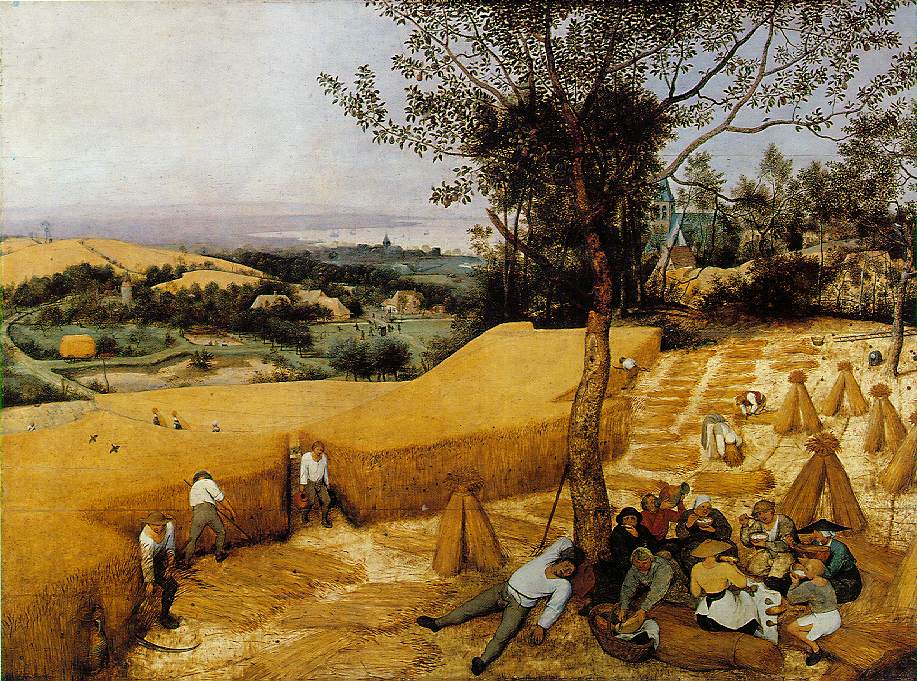
    His studio is in a small apple orchid behind his house. A streambed sits 10 feet from his door and idyllic fields stretch for miles in a scene from a Bruegel painting.


    It took his family a decade of waiting lists and bribes to get a phone. But today, we can have video conferences via DSL wireless broadband. He saw my daughter for the first time and waved at her.


    I asked him the Polish reaction to the election. He said he expected it. He said Americans are no different from most people; they are afraid of change and when people are afraid they will always go with the leader they know, the one who seems strong.


    This is the perspective from a land that lies between Germany and Russia. This country was split like a wishbone in 1939 by Hitler on one side and Stalin on the other. This European country didn't exist on the map of Europe from 1773 until Woodrow Wilson's Fourteen Points were imposed after World War I. (The best first-hand account of this WW II partition is Nobel Prize winning poet Czeslaw Milosz and his memoir The Captive Mind).


    My friend's grandfather, a pharmacist in the village of Sulkowice, was taken by the Nazis after the invasion, and shot for being, well, a pharmacist.


    Poles, who live a nation criss-crossed with memorials to massacres, mass graves and concentration camps, probably have more in common with Iraqis than the average American. Two shared traits: Poles and Iraqis inhabit flat plains between vast empires, and they remember every invading army that crossed their borders. Those memories fuel each nation's reputation for resistance.


    It must be the ultimate irony that Polish soldiers are now part of the Coalition of the Willing occupying someone else's country.

    peterdurand

    Peter Durand is an artist, educator & visual facilitator based in Houston, Texas.

    He is the founder of Alphachimp LLC, a visual facilitation company that helps clients understand and communicate complex systems visually. He is a leader in graphic facilitation and a professor at Northwestern University Pritzker School of Law.

    Mind-Bending Mappage

    The most bizarre and intriguing aspect of election night was the collective instinct of the networks to drive with a foot on the the brake and the other on the gas. All the while winking whenever news came through that a decisive count was in from any state.


    "Of course, we'll call it for Kerry or the President once all the provisional ballots are counted."


    The panoply of data-driven maps were a lesson in color-coded torture. The example that resonates the most is a map of the voting technology used per district.


    Besides the terrifyingly inaccurate voting systems in play (SAT-flashback optical scan, Homer Simpson write-in ballots, chad-addled punch cards), the actual color-coding system of the map itself (canary yellow, pale yellow, tan, cyan, chartruse) must have been the reject system from early 2002 Terror Alert System design days. Edward Tufte must be rolling in agony in his Eames chair.


    Go to www.verifiedvoting.org to see the voting technology used in your district or in others. And push for reform!!


    To balance this, NPR had a fantastic interactive map I watched all night as real-time data interfaced with the javascript rollover popup stats from the states. See NPR election map


    For a fly-over view of Texas districts, check out this Quicktime movie.


    Check out this beautifully gradiated version of our country by Robert J. Vanderbei departs from the bi-polar Blue vs. Red mindset to a more realistic depiction of the sliding scale in hues of purple.

    See map.


    Listen to an interview from Public Radio's Studio 360 [ www.studio360.org ], in which Kurt Andersen and graphic designer Paula Scher of the international design firm Pentagram, who designed Jon Stewart's best-seller America The Book, explore the grey areas, or at least the purple areas.


    Scher notes the transition in ownership of the color red from the 1950's (Red = Commie) to the 1980's (Red = Respectible):

    Well, I think the states have truly been branded. They've been branded by color. And I think it happened accidentally, but I actually trace it back to the 80s, when Nancy Reagan always wore red. And it was actually called "Reagan red." And I think that it was a perfect symbol for Ronald Reagan's sort of Republicanism, because, you know, it sort of affected power, being militaristic, and was something probably the Republican party could hang its hat behind.


    See text version of full interview with Paula Scher.

    peterdurand

    Peter Durand is an artist, educator & visual facilitator based in Houston, Texas.

    He is the founder of Alphachimp LLC, a visual facilitation company that helps clients understand and communicate complex systems visually. He is a leader in graphic facilitation and a professor at Northwestern University Pritzker School of Law.

    Whodunnit Pundit

    As has become customary in this political season, the fake news pundits have assessed the situation far more effectively than the blue background, hi-tech talking heads of network news. (Although I was impressed by Tim Russert's use of a digital tablet and stylus to tally electoral votes!)


    The Onion, of course, exhibits more editorial prowess in this article on a fictitous group of international voting observers, than the entire Wall Street Journal did on the electoral process.


    "Despite the specter of corruption in 2000, and even though the procedural problems which surfaced during the previous election were never remedied, the American people chose to put their faith in the system once again this year," said Joseph Mtume, a Kenyan diplomat who traveled to Ohio to view America's democratic proceedings. "You can't help but feel touched by the determination of these citizens who put their doubts aside to collectively participate in the democratic process. All this in a nation divided by war, where dissent is widespread and the rift between citizens has rarely been higher. It was truly stirring."


    Compare this [once agian fictitous] account with an account of the intimidation and suspicion directed at a real group of visiting international observers described in the article by Thomas Crampton of the International Herald Tribune titled Global Monitors Find Faults.


    Ethan Zuckerman records African reactions to this election and the processes behind it.

    peterdurand

    Peter Durand is an artist, educator & visual facilitator based in Houston, Texas.

    He is the founder of Alphachimp LLC, a visual facilitation company that helps clients understand and communicate complex systems visually. He is a leader in graphic facilitation and a professor at Northwestern University Pritzker School of Law.

    Voting Antiquity & Partisan Posters


    Astoundingexperience, this voting thing.


    I don't know if I was more affected by the antiquity of the machinery or of the ladies in charge of the polling place.


    One election official was actually on an oxygen tank. When asked how she was doing this fine Election Day, the Majority Official complained of hip pain, a cold and blurred vision. I believed her! When I presented her with a letter from the County Election Board verifying my right to vote, she temporarily lost it in the shuffle of papers on the cluttered foldout table.


    To her tired eyes, she pulled up a direct mail postcard advertising the merits of Verizon DSL service, and inquired: "Now, is this yours?"


    I was flummoxed by the voting machines with their long rows of switches, hospital gown curtains and sceptic florescent light. Fortunately, there was a robust cast iron display, circa 1962, illustrating the proper voting method.

    After the polling places closed, I snuck down to the corner of Federal and North Ave. and plucked some stellar polital ephemera off the abandoned buildings adjacent to the notorious Garden Theater (advertised on the marquee as "All-Day Continuous XXX Adult Videos").


    The posters I rescued were produced by The Partisan Project, and are beautifully simple cyan and dusty rose prints, in the best tradition of Cuban, Polish and 60's posters.

    peterdurand

    Peter Durand is an artist, educator & visual facilitator based in Houston, Texas.

    He is the founder of Alphachimp LLC, a visual facilitation company that helps clients understand and communicate complex systems visually. He is a leader in graphic facilitation and a professor at Northwestern University Pritzker School of Law.

    We, Who Used to Rock, Salute You

    You know you have crossed an invisible border in your life, when the decade in which you had the most fun suddenly becomes an entire genre of music. For me, seeing that "the Best of the 90's" is now a 24/7 feed on XM Radio along with the Trucker Station makes my joints ache (Vioxx where have you gone?!).


    Ten years ago this year, I was living in Krakow, Poland having a grand time doing all the unhealthy things we grow nostalgic for as time goes by and arteries harden��smoking, drinking, moping, looking for love.


    Somehow, with appallingly low language skills in Polish, I stumbled into a job as a DJ on RMF-FM, broadcasting live from Kopiec Kosciuszko (translated as "Kosciuszko's Mound").


    peterdurand

    Peter Durand is an artist, educator & visual facilitator based in Houston, Texas.

    He is the founder of Alphachimp LLC, a visual facilitation company that helps clients understand and communicate complex systems visually. He is a leader in graphic facilitation and a professor at Northwestern University Pritzker School of Law.