Failed State Index

Via the Z+ Partners blog, we learned about the Failed States Index. According to the Fund for Peace, the first Annual Fund for Peace/Foreign Policy Failed States Index shows that "about 2 billion people live in countries that are in danger of collapsing."

With index factors like "Legacy of Vengeance" and "Progressive Deterioration of Public Services", we are often times left wondering if the same index can be applied to urban neighborhoods in the US!

From FfP article:

"America is now threatened less by conquering states than we are by failing ones." That was the conclusion of the 2002 U.S. National Security Strategy. For a country whose foreign policy in the 20th century was dominated by the struggles against powerful states such as Germany, Japan, and the Soviet Union, the U.S. assessment is striking. Nor is the United States alone in diagnosing the problem. U.N. Secretary-General Kofi Annan has warned that "ignoring failed states creates problems that sometimes come back to bite us." French President Jacques Chirac has spoken of "the threat that failed states carry for the world's equilibrium." World leaders once worried about who was amassing power; now they worry about the absence of it."

So, who are the top 3 biggest failures, according to the 12 factors used by the index?

  • Dem. Rep. of the Congo - 105.3
  • Sudan - 104.3
  • Iraq - 103.2
The purpose of the Index is to "encourage others to utilize the Failed States Index to develop ideas for promoting greater stability worldwide."

The hope is that the Index will "spur conversations, encourage debate, and most of all help guide strategies for sustainable security."

In failed states, the commerce of destabilization becomes an industry in and of itself. In Iraq, the business of building and selling IEDs or "Improvized Explosive Devices" is--pardon the bad pun--booming.

Thomas P. M. Barnett's basic idea in The Pentagon's New Map is that Gap States (aka. failed states) are the source of all war, terrorism, disease, ethnic cleansing, mass migration, environmental degradation, etc. And, that the real game is keeping Seam States (those on the border of failure) from "slipping into the Gap".


Global Guerrillas is a blog by Jon Robb focused on "networked tribes, infrastructure disruption, and the emerging bazaar of violence. An open notebook on the first epochal war of the 21st Century." Robb gives good insight into the complex ecosystem of insurgents, governments, NGOs and reconstruction/security contractors that make up the landscape of failed states.

The Failed State Index

  1. Mounting Demographic Pressures
  2. Massive Movement of Refugees and IDPs
  3. Legacy of Vengeance - Seeking Group Grievance
  4. Chronic and Sustained Human Flight
  5. Uneven Economic Development along Group Lines
  6. Sharp and/or Severe Economic Decline
  7. Criminalization or Delegitimization of the State
  8. Progressive Deterioration of Public Services
  9. Widespread Violation of Human Rights
  10. Security Apparatus as "State within a State"
  11. Rise of Factionalized Elites
  12. Intervention of Other States or External Actors

peterdurand

Peter Durand is an artist, educator & visual facilitator based in Houston, Texas.

He is the founder of Alphachimp LLC, a visual facilitation company that helps clients understand and communicate complex systems visually. He is a leader in graphic facilitation and a professor at Northwestern University Pritzker School of Law.

The F-Word: Forgiveness

Their stories share the same elements: loss, grief, anger, intolerance, pain. They share the same ending and the same message to the reader: in order to heal thyself, you must forgive those who have caused you harm.

The Forgiveness Project aims to share modern-day stories of individuals who chose the path of understanding and forgiveness to repair lives torn apart by conscious acts of evil. Some acts of violence are wrapped in ideology. Many of the acts were state sanctioned. Others are utterly random crimes without purpose, without logic.

There is Andrew Rice, who has dedicated himself to trying to understand the underlying causes of violence after his brother, investment banker David Rice, was killed when the World Trade Centre collapsed.

Ghazi Briegeith, a Palestinian electrician living in Hebron, and Rami Elhanan, an Israeli graphic designer from Jerusalem, met through the Parents’ Circle – a group of bereaved families supporting reconciliation and peace.

The stories emerge from diverse lives: a nurse who treated innocent victims of sectarian violence and a former paramilitary in Belfast, Bishop Desmond Tutu and a former prison guard in South Africa, former rival gang members in Los Angeles, Palestinians, Isrealis, parents, siblings, children, survivors, killers.

That F-word, forgiveness, is the crux of the crucifixion at the center of Christianity. It is at the heart of Buddhist compassion; of the Torah's stories of family strife healed by fraternal empathy; of the Muslims' peace in the knowledge that Allah is gracious and they need not earn His forgiveness.

To atone means to make amends, to repair a wrong done. Biblically, it means to remove sin. In life, it means having the courage to say--and the patience to hear--those healing words: "I forgive you."

peterdurand

Peter Durand is an artist, educator & visual facilitator based in Houston, Texas.

He is the founder of Alphachimp LLC, a visual facilitation company that helps clients understand and communicate complex systems visually. He is a leader in graphic facilitation and a professor at Northwestern University Pritzker School of Law.

100 Miles for Kids (Update)

UnicyclingBamyanMany of you have asked for updates on Zach Warren, former Alphachimp intern who has been helping the Afghani Children's Circus in Kabul.

The full article contains a letter detailing his travels to Bamyan bazaar, a site where Buddhists and spiritual seekers have lived, studied, and gathered from all around the world since the 5th century (AD); the site of the famous Buddhas that were destroyed by the Taliban because they were considered images/false idols.

It is hard to imagine that a year ago, we saw Zach performing in West Park on Pittsburgh's North Side at a community arts fair. He was riding a 7-foot unicycle, juggling flames and inspiring awe and admiration from tough Northside kids.

In March, I was in Boston on business and walking away from Harvard Square when I spotted the inimitable profile of a skinny, bespeckled man with a flaming red beard and brilliant smile on an enormous unicycle (a sight one usually does not encounter outside Harvard Stadium on a blustery Spring afternoon). It was at that chance meeting that Zach announced his intentions to beat the World Record for the fastest 100 miles on a unicycle.

Well, read on for more interesting details in Zach's own words.
A brief slideshow of photos from performances in Europe and Afghanistan are here.
Zach Warren's first missive from Afghanistan is posted here.

_______________________________
from Zach Warren:

Salaam from Karte Seh, Kabul,

I hope this finds you safe and in good spirits.

Nearly one month ago, what little I knew of Afghanistan I knew by pictures and words, maybe a couple good books, like Kite Runner or An Unexpected Light and sound bites from the Boston Globe or Washington Post.

Even if I knew better, I still had in my mind images of stoic-faced men with turbans and rocket launchers hiding in caves.

The news wasn't pretty specific.

"17 suspected dead in helicopter crash...explosion in internet cafe kills several foreign NGO workers...U.S. forces growing closer to Osama... Concerns for escalated violence as Parliamentary elections approach...Hamid Karzai to root out "foreign spies" in government..."
What it didn't, and doesn't, convey about Afghanistan is what I consider so far to be at the heart of my experiences here: the laughter, tenderness, hospitality, and religious and ethnic diversity in daily life.

I hope I can share some of that with you, to round out the news reports.

The road to Herat

A week ago I found myself bouncing around in a van with a cracked winshield on the famous road between Kabul and Herat with seven married Afghan men for ten hours at a time.

We passed through the former Kush Empire, through lands once under Greek rule by Alexander the Great, past the mysterious caves and mountain-castle of Zoroaster, through herds of goats and dozens of streams, past upside-down tanks and empty roadside rocket shells, and finally through the remains of the Bamyan bazaar, a site where Buddhists and spiritual seekers have lived, studied, and gathered from all around the world since the 5th century (AD).

This was the site of the famous Buddhas that were destroyed by the Taliban because they were considered images/false idols.

Along the way, Hamid, Du'ad, Nadir, Asad, Jamil, and Sher Khan have more than a dozen laughing fits.

The MMCC Circus teachersI'd never seen a group of Afghan men laughing playfully until this trip, even though it happens all the time here.

They sing to the radio and clap until my ears echo with Indi and Afghan pop music. We stop along the way and squat by a river, eating fresh mangoes and watermelons, then for daily prayers.

They tease me like a close friend and we break bread together at every meal, eating naan flat bread for breakfast, then potatoes, rice, oils, and naan for lunch and dinner.

Young MMCC juggler

In Bamyan, we gave six performances in different schools, for both boys and girls. One of the MMCC girls even gave a juggling performance at a girls school. (Imagine the impact on a young girl's sense of self confidence and self agency from juggling three clubs in front of hundreds of her peers, meeting great applause and laughter!)

Attached are a few pictures from the Bamyan performances, including one where you can see the smaller Buddha in the background (or the great rock inset where it used to stand over 100 feet tall.

In front of Buddhas of Bamyan

It is said to have had a gold plated face that reflected light onto the town of Bamyan in the morning sunlight).

We also performed beside the green waterfalls of Banda-amir, and at schools in Shaidon and Didir.

These performances were entertaining for the audiences, but they always deliver important messages in powerful ways.

A few MMCC kidsSkits include, for instance, a piece on conflict resolution that uses a frog, a horse, and a bear, where the frog and the horse can't get along, and the bear enters as the peace-maker.

Since it would be inappropriate for the MMCC performers to speak about conflicts between Afghan ethic groups directly, the metaphorical use of animals conveys the same message indirectly. Other skits teach about hygeine, malaria prevention, and safety measures to avoid land mines.

In a region where culture and custom is often said to trump laws and rules, the use of persuasion through circus arts is an especially pragmatic method of promoting social change. Simply handing out brochures, posting posters, or talking to local elders seems to change very few minds alone.

Training for EuropeNow I'm back in Kabul, training a group of Afghan kids for an upcoming tour of Germany and Denmark, beginning August 3rd. For most of them, this is the second time out of the country.

The first time was when they fled to Pakistan or India during the Taliban regime.

Nearly all of the MMCC kids are refugees, and the population of Kabul continues to soar as Afghan families return to their native lands (some ethnic groups have waited generations for this chance).

In other interesting and unusual news -- I received a call from the White House in May, to my surprise. They wanted a performance in June, but because I was out of the country, my friend Ben Sota (www.zanyumbrella.com) went in my place. Now he tells a good tale of having a food fight with a few Senator's children, at least until their parents intervened...

I'll likely perform there over Christmas instead, if exams allow it.

Also, the www.Unicycle4Kids.org website has been updated, and so has the MMCC's website: www.AfghanMMCC.org .

If you're curious, I invite you to check them out, and of course feedback is always welcome.

Hodahafez, blessings, and care,

Zach

zach.warren@gmail.com
zwarren@hds.harvard.edu

peterdurand

Peter Durand is an artist, educator & visual facilitator based in Houston, Texas.

He is the founder of Alphachimp LLC, a visual facilitation company that helps clients understand and communicate complex systems visually. He is a leader in graphic facilitation and a professor at Northwestern University Pritzker School of Law.

The Eve of Genetic Construction

Ah, who knew genetic slicing could be so fun? Perhaps, for example, the artist Alexis Rockman, whose nouveau-dioramas depict pernicious acts of cross-breeding and super-engineered sports stars.

So, what happens when the Adam of the future cuts out the middleman (aka God) and creates his own helpmate and romantic interest, Eve, through genetic re-engineering?

Eve: The Novel by Aurelio O'Brien is no slickly-oiled vision of the future, but a throw-back to the monster truck playing cards of the '70s: walking eyeballs, multi-headed deer, a stink-on-demand skunk, and a real, live beetle car.

The characters in the novel are described as "the same ones who use supercomputers to make cartoons, Hummers as commuter cars and think actors should lead governments; who are simultaneously clever and idiotic, charming and vulgar, childlike and childish."

O'Brien's promo site, www.evethenovel.com, is one of the best use of Flash-as-teaser I've ever seen.

From Lee Potts' blog, The Eyes Have It:

In order to promote his book, Eve: The Novel, Aurelio O'Brien created a number of bizarre animations illustrating some of the more mind-blowing (and humorous) possibilities of genetic manipulation in the forth millennium. It looks like a good story but I can't be the only one who finds that sink animation seriously disturbing.
From the author's description of the novel:
The time is the fourth millennium. The storyteller is a robot, Pentser, a lone relic of times lost, a museum piece of electronic memorabilia, an automated antiquarian of long forgotten information and, in his own humble opinion, mankind's most perfect creation. The premise is simple: what if you created your perfect mate?

Pentser's user, a 600-year-old-but-doesn't-look-a-day-over-twenty man, Govil, is unhappy. Although he--and everyone else on Earth--lives in a luxurious, genetically designed paradise of eternal health and ceaseless pampering, Govil wants something more. He doesn't know what it is, but he wants it anyway.


The Farm, 2000 by Alexis Rockman,
oil and acrylic on wood panel, 96 x 120 in.

Listen to Rockman talk about his art and his creative process.

peterdurand

Peter Durand is an artist, educator & visual facilitator based in Houston, Texas.

He is the founder of Alphachimp LLC, a visual facilitation company that helps clients understand and communicate complex systems visually. He is a leader in graphic facilitation and a professor at Northwestern University Pritzker School of Law.

Monkey Mind

From News.com.au:

'Human-Brained' Monkeys by Nick Buchan

Scientists have been warned that their latest experiments may accidently produce monkeys with brains more human than animal.

In cutting-edge experiments, scientists have injected human brain cells into monkey fetuses to study the effects.

Critics argue that if these fetuses are allowed to develop into self-aware subjects, science will be thrown into an ethical nightmare. READ FULL ARTICLE

[via Jarrell McAlister of Donkey Top]

Full article available at:
http://www.news.com.au/story/0,10117,15891104-13762,00.html#1

peterdurand

Peter Durand is an artist, educator & visual facilitator based in Houston, Texas.

He is the founder of Alphachimp LLC, a visual facilitation company that helps clients understand and communicate complex systems visually. He is a leader in graphic facilitation and a professor at Northwestern University Pritzker School of Law.

Security Data Maps

There are two ways to use data: (1) to reveal a story about the past, the present or the future; and (2) to hide the truth.

Worldchanging.com has a combo of data visualization tools that reveal a story along the vectors of location, time and crime.

From Mapping Politics: The Means of Expression - Media, Creativity and Experience:

Maps are not neutral -- or, rather, the creation of maps is not a neutral process. The choice of what the map covers, and what details to include or exclude, is an inherently subjective process.

~ Jamais Cascio, www.worldchanging.com

We've been waiting to see a modern version of Minard's data map portraying Napoleon's catastrophic march to Moscow in 1812.

Designed by Tim Klimowicz, The Iraqi War Fatality map is as poignant as it is elegant.

Built in Flash, the animation charts the US and coalition military fatalities that have occurred in the war in Iraq since March 2003. As a counter ticks off the days of conflict (well past the May Mission Accomplished mark) black dots and red flashes appear on the map indicating the death of a coalition soldier.

There are no marks for wounded, for killed international contractors, for Iraqi civilians or for Iraqi civil security forces. That would result in a very different map.

This map, however, drives home the message that every day is a dangerous day in Iraq. Data is taken from www.icausulties.org with geological information from www.globalsecurity.org. The Project plans to continue as long as the war does.

In Simming the City, Cascio discusses the uses of data and simulations, ala real life SimCity, to guide city and community leaders in real life American cities. Chicagocrime.org is a freely browsable database of reported crimes in Chicago.

In a unique integration of resources: Google maps and the Chicago police department's website.

With the SimCity model in mind, a wealth of new ideas for GoogleMap applications spring to mind, both directly taken from the game and simply inspired by it. School ratings, fire scenes, public transit outages, Critical Mass events, recent store closures (perhaps mapped against big box retailer locations), LEED-certified and registered buildings... A key step to making a change to a system is seeing its underlying patterns. GoogleMaps may well turn out to be a critical tool for recognizing where action is needed as we reinvent our urban environments.
For six years, I lived on the 800 block of Buena Avenue in the Lakeview neighborhood on Chicago's northside. It's a half mile from Al Capone's old gin joint in Uptown, The Green Mill, now a popular site for brutal poetry slams.

When our landlord, a retired fire chief, bought the building it was an abandoned structure across the street from a deserted lot filled with crack vials. Around the back was a burned out church which was a favorite hangout for transvestite hookers.

Thanks to rampant yuppization of the area around Wrigley Park, things have tamed. When I checked out the RSS feed of crimes on my former block, I found only five crimes committed, most of them sounding like scenes from a 1950s film on street racing: motor vehicle theft, criminal damage, criminal trespass, reckless conduct, and, the most innocuous-sounding of all, deceptive practice.

Funny how one becomes nostalgic for depravity.

For a glimpse of the truly bad old days of Chicago, complete with the windiest politicians, rollicking red-light districts and most notorious vice games, you can always book a ticket on the Chicago Untouchables Tour.

peterdurand

Peter Durand is an artist, educator & visual facilitator based in Houston, Texas.

He is the founder of Alphachimp LLC, a visual facilitation company that helps clients understand and communicate complex systems visually. He is a leader in graphic facilitation and a professor at Northwestern University Pritzker School of Law.

Let's Go Logo

Every kid with a Mac and a pirated copy of Photoshop eventually gets asked to design someone's logo.

Whether the request comes from family, a good friend, or friend-of-the-family, the assumption is: "Hey now, don't all you graphic types just know how to shake a logo outta that there electronic box of yours?"

Truth be told: No, but we know how to fake it!

If we can't fake it, then we rip stuff off. As Pablo Picasso is said to have said, "All artists borrow; real artists steal."

Creating a corporate identity is as challenging for the family-owned pizza shop as it is for a newly formed global conglomerate; the client is usually inarticulate as to their expectations or what direction to take, and yet they seem categorically opposed to actually listening to the opinion of the designer whom they have contracted for the job.

Oft times the client feedback sessions come close to echoing the words of Homer Simpson's boss, Monty Burns: "I don't know what I want, but I know what I hate. And I hate that!"

And what's more, a swank logo does not a brand make.

For the latest trends in logo design, check out the Third Annual Visual Trends Report at Graphic Design USA by Bill Gardner of LogoLounge.com. Bill writes:

The word “trend” seems to raise the little hairs on the back of some designers’ necks. Everybody wants to be a you-know-what-setter; no one wants to acknowledge the aftermath. But as we march toward LogoLounge.com’s fifth anniversary, we’ve discovered that trends have become something impossible — and maybe unwise — to ignore.
Some of the 15 trends include leaves, weaves, dots, blurs, washouts, whips and more.

[via Mark Hurst at Good Experience]

Also at LogoLounge, Rob Camper, Principal and Creative Director for Times Infinity
(www.thebrandiseverything.com), writes a guest editorial Brand Discipline Redux: Beyond Brand Identity.

Camper writes of the need for designers to expand--and standardize--their branding language lexicon. He sees The Brand as having multidimensional and constructed of different companents: the Concept, the Promise, Identity, Personality and Values:

Making Design Relevant
So how is a discipline that is more neural psychology than visual imagery supposed to benefit designers? First, the work gets focused, targeted, uber-revelant, and is turned out much more efficiently. We have also seen that an otherwise overly fussy client will bow to a design that might be outside of their personal tastes, when they recognize the opportunity of a greater good being served.

Second, the savvy designer will know when to steer a client toward a real branding regimen when the problems run deeper than needing a new logo. Several years back, Sean Adams (AdamsMorioka) did that for a music video network (VH-1) that was primarily interested in a new visual identity. His recommendation: conceptual ownership. Adams and his team came back with a tighter focus, new programming ideas and a comprehensive visual makeover. The network wanted a Band-Aid; Adams performed a triple-bypass and followed up with serious group therapy.

And third, if designers are to reclaim their position up the food chain with other executives, we need to become more relevant – and that means understanding 'brand discipline'.

For a dose of the counter-branding counter-culture, there is Naomi Klein's No Logo.

peterdurand

Peter Durand is an artist, educator & visual facilitator based in Houston, Texas.

He is the founder of Alphachimp LLC, a visual facilitation company that helps clients understand and communicate complex systems visually. He is a leader in graphic facilitation and a professor at Northwestern University Pritzker School of Law.

Favorite American Movie Posters

From our pal, Bo “The Hip-Hop Hillbilly” Maupin, we learned about Internet Movie Poster Awards:

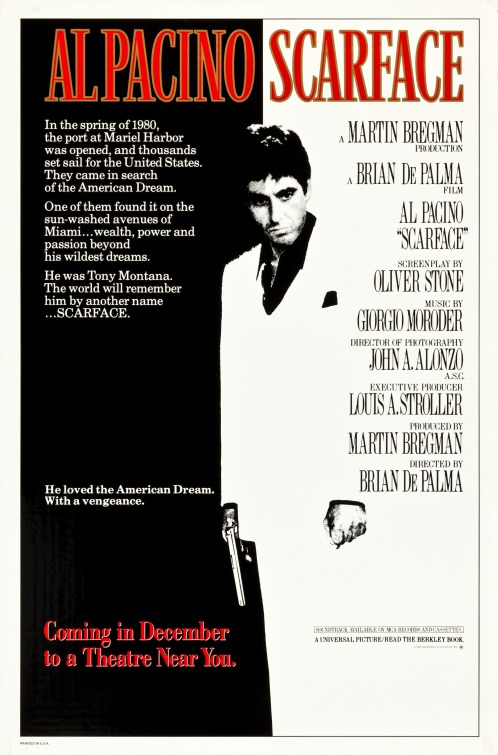
I figured most folks might like this link. It’s a really well organized reference to a deep selection of movie posters from 1974 until now. Of course there are commercial links, but still a nice source none the less. I still have my original Scarface poster. I didn’t know it was going to be a requirement in everyone’s house on MTV Cribs.
I am lucky to have a group of friends from my home town who continue to harrass each other via email.

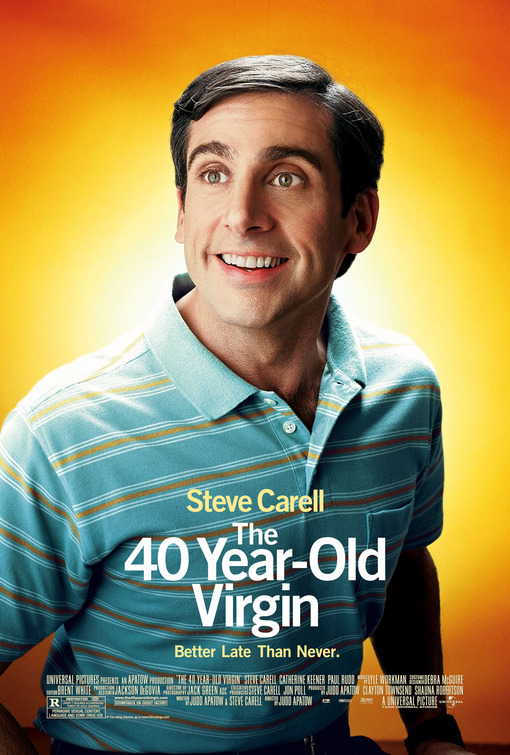
We heard about this poster resource when another hip-hopping hillbilly, Craig Bates of Knoxville, sent an image that looks remarkably similar to one of the crew.

The poster is for the upcoming film The Forty-Year-Old Virgin starring Steve Carrell, currently the star of the American version of "The Office".

peterdurand

Peter Durand is an artist, educator & visual facilitator based in Houston, Texas.

He is the founder of Alphachimp LLC, a visual facilitation company that helps clients understand and communicate complex systems visually. He is a leader in graphic facilitation and a professor at Northwestern University Pritzker School of Law.

We Miss You, Milosz

Thanks to the daily message from Garrison Kiellor at The Writer's Almanac, I am reminded that it's the birthday of the poet Czeslaw Milosz, Nobel Prize-winning poet and survivor of the vivisection of Poland by Germany and Russia during World War II.

During my time as a student in Krakow, I witnessed Milosz's return to the country he had left 44 years earlier. The school I was attending had arranged for a special meeting with the man; so, a hundred of us foreigners crowded into a lecture hall to hear him read his work and answer questions.

By that time (1994), the poet was in his 80's and sharp as a tack, but deaf as a stone. A persnikity Polish professor served as moderator and translator. Two friends, first generation Chicago Polaks, elbowed me in the ribs until I stood to ask a question.

In my garbled Polish, I attempted to ask him how he felt coming back to his country after so many years in exile. I mentioned that he and anothe Nobel Laureate, Aleksandr Solzhenitsyn, had both returned to their respective homes that spring after decades in the West.

Slozhenitsyn had spent roughly a third of his life in the Russian army, a third in the dismal Russian prison system, and a third in exile. His observation of the vast Soviet prison network are detailed in Gulag Archipelago.

In the lecture hall, the Polish professor sneered at my butchering of the past perfect tense but passed on the question; my friends snickered.

Milosz replied that Slozhenitsyn was returning as a prophet, a saint, a guru; Milosz felt he was just and old poet coming home.

Later that week, I spotted Milosz in the literary cafe that has been around since he was a student at Jagiellonian University in the 30's. He was seated with a young student in the back courtyard at a small table nestled in an overgrown garden, laundry strung out between two pear trees and stray cats on the prowl. They were debating about poetry, about words.

The old man had seen so many people shot, bombed, imprisoned, exterminated, rubbed out--all because of language, because of ideas. The young man was coming of age during a time a vast awakening, of falling walls, of widening horizons, of increasing freedoms, of new dangers.

Eleven years later, I'm sitting in my own overgrown urban garden, ivy assaulting a three-story brick wall, crazy gee-gaws and wind chimes fluttering, a tight formation of invasive orange Tigerlillies. So much of my work has been to recreate that space in which I saw the ancient, venerated poet passing on a bit of electricity to the clean shaven young romantic, telling him: "Language is the only homeland."

Encounter

We were riding through frozen fields in a wagon at dawn.
A red wing rose in the darkness.

And suddenly a hare ran across the road.
One of us pointed to it with his hand.

That was long ago. Today neither of them is alive,
Not the hare, nor the man who made the gesture.

O my love, where are they, where are they going
The flash of a hand, streak of movement, rustle of pebbles.
I ask not out of sorrow, but in wonder.

~ Czeslaw Milosz, Wilno, 1936


From The Writer's Almanac:

Born in Szetejnie, Lithuania (1911), Milosz grew up in a Polish-speaking family. He studied law rather than literature, but co-founded a literary group in 1931. The group was so pessimistic about the future, it was nicknamed the "Catastrophists." They predicted a coming world war, though nobody believed them.

Czeslaw Milosz wrote anti-Nazi poetry after the invasion of Poland in 1939. He witnessed the genocide of the Jews in Warsaw. He was one of the first poets to write about it in his book Rescue in 1945.

After the war, he got a job as a diplomat for communist Poland, though he was not a member of the communist party. One night, in the winter of 1949, on his way home from a government meeting, he saw jeeps filled with political prisoners, surrounded by soldiers. He said, "It was then that I realized what I was part of." He defected two years later and went to Paris.

Most intellectuals in Paris were pro-communist at the time. They thought of Milosz as a traitor. The poet Pablo Neruda attacked him. In 1953, Milosz published a book about communism called The Captive Mind. He moved to the United States and started teaching at Berkley in 1960. He had mixed feelings about the United States. He kept writing poetry in Polish, although almost nobody was reading it. His books had been banned in Poland, and his poems weren't translated into English until years later. In 1980, he got a phone call at three in the morning telling him that he'd won the Nobel Prize for Literature.

peterdurand

Peter Durand is an artist, educator & visual facilitator based in Houston, Texas.

He is the founder of Alphachimp LLC, a visual facilitation company that helps clients understand and communicate complex systems visually. He is a leader in graphic facilitation and a professor at Northwestern University Pritzker School of Law.

100 Miles for Kids


Zach Warren, former Alphachimp intern, is a divinity student and circus performer with a social mission.

After his first year at Harvard, Zach and his friends have been preparing for a massive trip to Afghanistan in order to support the Afghani Mobile Mini Circus for Children. Zach has been raising money through his 100 Miles for Kids Campaign.

To raise $10,000 for the Circus, Zach will attempt to break the GUINNESS WORLD RECORD™ for the “FASTEST 100 MILES ON A UNICYCLE”! One wheel, one clock, one pair of legs, one time to beat!

The current world record for 100miles on a unicycle was set in 1987 by Takayuki Koike of Japan. His average speed was 14.85 mph, resulting in a time of 6 hours, 44 minutes, and 21.84 seconds.

Currently, there is an international competition to break the record, including an attempt made in February of 2005, by Ken Looi in New Zealand. Looi failed to break the 100-mile record but succeeded in breaking the 24-hour distance record. Looi will reattempt the record later this year, explaining that "I can't stand unfinished business."

Though the official attempt is Oct. 11, Zach is doing a pilot trial this Thursday, May 19, between 7am-2pm, on the 400m Kissena Velodrome Track, Queens, NY. The track was generously donated by the NYC Cycling Club.

“We cannot take the gift of laughter for granted. Thousands of children in Afghanistan have to relearn how to play because the line for them between playful imagination and violent reality is so fragile.

The Afghan Mobile Mini Circus for Children is an established "Child-Protection" NGO that helps Afghani kids relearn how to play. More than a circus, the MMCC empowers children to develop their own sense of identity and meaning through the arts."

- David Mason and Zach Warren, MMCC

The story that follows details his adventures with special needs kids in Ireland who are entertaining and delighting crowds. The real star of the show is Eogan, a great kid who plays the Devil and challenges members of the audience to wrestle.

For more detail and photos, read on!

From an email sent to Alphachimp Studio by Zach Warren:

After a string of circus adventures in the UK, Switzerland, and Italy, I'm back in Cambridge (USA) for a brief moment to collect my thoughts, and my belongings. In a few hours, I leave again for Delhi, India, to meet with some street performers, then head off to Kabul, where these bones will be living and learning the next ten weeks.

I'm feeling a bit uneasy about going just before elections, for fear that the violence will escalate, but am relieved to know that I will be in good hands with the circus and a longtime friend who's in Kabul now. I never expected to be doing anything quite like this, but I feel drawn to this work in this place.

In 2001, President George W. Bush stood amid the fallen towers of the World Trade Center and said, "They will hear from us." And he's right. The world is a connected place, and the "they's" and the "us'es" must hear from each other. In two hours, I am heading toward Afghanistan with a duffle bag full of juggling equipment, camera equipment for research on the healing effects of circus interventions, and a desire to listen, learn deeply, and share the transformative power of circus arts with children who have grown up with war, drought, poverty, and other forms of violence.

I'll arrive with aid in the form of circus donations, too. Steve Ragatz, an international circus performer and juggler in Cirque du Soleil, constructed juggling boxes, clubs, torches, and rings for me to give to the MMCC (see www.stevenragatz.com). David Ascroft of the Cirque Uplands Circus in Canada, another children's circus, sent over to Kabul $600 of circus equipment, including a custom unicycle (www.drkaboom.com). It's not enough for the nearly 50 kids in the circus, but every bit helps in a big way. I will send another email after I arrive and have settled.

But what happened to June, you may ask? How did the street performing experiment with special needs adults work out? If you're curious and have a moment, read on. I also invite you to check out a few photos.

Let's imagine, for a moment, that you are a circus performer and a divinity student. Imagine that tomorrow morning you will wake up not in your normal abode, but in a special needs community in Dingle, Ireland. Eogan, a 25-year old Irish lad with Downs Syndrome, sideburn chops, and an infectious sense of humour, taps you on the shoulder to wake you up. "Wake up or I'll arm wrestle you, I will," he quips with a thick accent. Eogan is a natural entertainer, and a character. He'll chat up nearly anyone on the street.

After raking the dust off your eyeballs, you rise, then glance out the window at cow pastures and the distant sea. It's beautiful. Rediculously green. Hobbling to the kitchen table, you meet John, a 29-year-old special needs man with a red beard, a slender frame some six feet tall, and the sort of facial expression you'd expect from someone who's just woken up. (John's not a morning person.) "Hi," he says in monotone, scraping some fresh strawberry jam onto white bread, always with intensity in his eyes. John is the philosopher in the group. Not the kind of philosopher who writes, reads heavy books, and wears black turtle necks, but the kind who makes those basic statements about life that are at once remarkably ordinary and remarkably profound. To get him talking, simply ask him about the meaning of life, and he'll give you a long soliloquoy, sometimes stuttering, sometimes changing his mind mid-sentence, but always with a sense of fervor and existential urgency.

At the breakfast table to your right sits Duncan, a dear friend from Harvard, also a talented musician and a philosopher-theologian in his own right. After college, Duncan lived with these two fellows -- John and Eogan -- for two years in a Camphill special needs community in Callan, Ireland. This week, all four of you are taking a holiday -- not as tourists, but as street performers. A rare bunch. The likes of you may never come together again in this way, but the experience is built to be memorable.

Today, and each day, you spend a few hours dancing, whistling, singing, juggling, arm wrestling, and storytelling on the street. What's your act?? The goal for this experiment is to have something performative in which everybody can participate -- the four performers, and the audience, too. After a few days of planning and more than a few rounds of Guinness, you have it: a story to tell and a series of songs to narrate along the way. More importantly, you have roles that befit each of your strengths and personalities. Duncan sings with his guitar. John plays "The Meaning of Life." Eogan plays "the Devil." And you... you're the juggler.

Juggler Man sets out on a quest to find The Meaning of Life. Behind him, Duncan sings, Eogan blows into a recorder, and John looks at the audience with his typical intensity. Along the way, Juggler Man encounters the Devil, who tries to keep him from the Meaning of Life. Eogan seizes the imaginary stage wearing a full-body red wetsuit, a costume he picked out from a second-hand store. After a series of challenges -- juggling baseball bats, tennis rackets, even flaming torches -- Eogan calls you to an arm wrestling match, one of his favorite pasttimes. Inevitably, you lose, and must call to the audience for help. "You, sir, do you want to wrestle with the Devil?"

Someone, eventually, beats Eogan, who takes it all in good fun. Later, the Devil and Meaning of Life have a stare-down, a staring contest judged by the audience, after which John demonstrates his magical prowess as the Meaning of Life, balancing two spinning plates simultaneously atop long sticks, then giving an always impromptu piece of wisdom or poem, like, "Love, love, why the love?" A finale to celebrate the ending might be juggling knives, or balancing Duncan's guitar on your chin. At least, that was our story. John and Eogan loved it, and so did Duncan and me. For John and Eogan, it was a chance to show off just a few of their skills, proving that special needs can also come with special talents, and also nurturing their natural spirit of play. As performers, each of us can be special, and in ways that bring confidence and sociability rather than a sense of isolation or aloneness.

I better finish packing and scoot out the door. Forgive me if I haven't responded to your email, but know that I do read all my emails, even if there's no time to reply. Thanks for keeping me in your heart! You're certainly in mine.

peterdurand

Peter Durand is an artist, educator & visual facilitator based in Houston, Texas.

He is the founder of Alphachimp LLC, a visual facilitation company that helps clients understand and communicate complex systems visually. He is a leader in graphic facilitation and a professor at Northwestern University Pritzker School of Law.

Samantha Appleton, Photojournalist

There comes a time when you just have to brag about cool people you know.

One of them in our life is Samantha Appleton. Though she looks like a kind-hearted, easy-going young woman from Maine (she is), Samantha is a brave photojournalist who gets close--not just too the action, but to the humans at the center of the drama.

Whether she is photographing firefighters at ground zero, insurgents in Iraq, or Nepalese circus girls, Samantha's images uncover the very human elements beneath the headlines. She shows us the anxiety, the worry, but she also shows us the kindness, the unexpected joy, the gestures of empathy.

Her photos capture the vulnerability beneath the hard shell titles of Outsourcing, Insurgent, Resue Worker, Security Forces, Immigrant, Refugee.

Visit www.samanthaappleton.com to see photo essays: Nepali Circus Girls, Iraqi Militias and Civilians, Mexico's Southern Border, 9/11, Maine Handicapped Skiing, Lubec Maine, and India Outsourcing.


peterdurand

Peter Durand is an artist, educator & visual facilitator based in Houston, Texas.

He is the founder of Alphachimp LLC, a visual facilitation company that helps clients understand and communicate complex systems visually. He is a leader in graphic facilitation and a professor at Northwestern University Pritzker School of Law.

True Films

Tired of the big Hollywood summer blockbuster hype that so rarely delivers anything more than access air conditioning?

Thanks to the magic that is NetFlix and access to truly interesting films, you need not lament the absence of the latest John Sayles film or chase down a two-day screening of the riveting documentary Gunners Palace.

For a film that combines the best of documentary, fine art and nature, watch Rivers and Tides, the on-screen revelation of the work of Andy Goldworthy. Afterwards, you'll be inspired to venture outdoors and create beautiful works of your own from found objects a nature's own art supplies.

Film Movement was started in response to the regional hegemony of film distribution companies that squeeze out any indy film (unless it gets picked as an Academy Award front-runner!). The group's mission declares that...

Film Movement is for anyone who does not want to miss out on outstanding films because of where they live. Most films do not receive a national release despite critical acclaim and awards at Cannes, Sundance and other top film festivals. As a result, most of us don’t get to see many of the year’s best films. Film Movement is changing all that…
Similar to NetFlix, this is a subscribtion service of $19.95/mo. (or $159/year). However, the DVDs are your to keep instead of ship back, and it is limited to one per month. The upside: these are the primer DVD and include access to press kits, dicussion guides and insider information to assist teachers, discussion groups and cinemaphiles.

Kevin Kelly, formerly of WIRED and The Whole Earth Catalog, has compiled a review of 100 DVDs at his own True Films.

Kelly is a sponge for the useful, the quirky, the singular and the essential. His list of Cool Tools brings the top picks of gadgets, books, hacks, tips and manuals ranging from igloo making to reusable menstrual cups and extreme pogo sticks.

peterdurand

Peter Durand is an artist, educator & visual facilitator based in Houston, Texas.

He is the founder of Alphachimp LLC, a visual facilitation company that helps clients understand and communicate complex systems visually. He is a leader in graphic facilitation and a professor at Northwestern University Pritzker School of Law.

Art of the Mexican War Streets

Peter and Diane Durand will be participating in the open house celebration at the Firehouse Studios on Pittsburgh's North Side:

Firehouse Studios
1416 Arch Street
Pittsburgh, PA 15212
(located off North Ave. near Allegheny General Hospital see map)

Friday evening, June 24
Opening reception on from 6 to 10pm

Saturday & Sunday, June 25 & 26
Open studios from 12-4 pm

The Durands will display works inspired by their recent trip to Sante Fe, New Mexico. Dozens of local painters, photographers and ceramic artists will also be on show.

peterdurand

Peter Durand is an artist, educator & visual facilitator based in Houston, Texas.

He is the founder of Alphachimp LLC, a visual facilitation company that helps clients understand and communicate complex systems visually. He is a leader in graphic facilitation and a professor at Northwestern University Pritzker School of Law.

The Slings and Arrows of the Designer's Craft

My doctor friend has a theory: People tend to stick with the haircut they had at the moment in time when they felt at the top of their game, when all was right with the world, when they were cool.

Styles may change, and the common opinion about what defines cool may change too, but each of us clings to that haircut. (In fact, even Marge Simpson had to check with her children if the word "cool" was still cool.)

Same can be said for design and designers (or singers!). Once a certain way of composing a piece of work leads to success, the trap is sprung and they're stuck.

It is the very rare artist that can slalom between the demands of the market and the drive for authenticity. In the creative tension between the two, true genius thrives.

To get a glimpse of the process that such designers employ to propel them, check out the archived interviews conducted by designer, researcher, writer and teacher, Ellen Lupton at designwritingresearch.org.

Don't miss the free advice page with links to designers who've survived the slings and arrows of outrageous fortune and the shifting technologies of the designer's craft.

Contributors include Pantagram's Michael Bierut, MIT's Media Lab founder Nicholas Negroponte and, my favorite Russian constructivist, Vladimir Mayakovskii.

Beirut, along with several other designers and critics, has launched a blog, DesignObserver, dedicated to keeping an eye on international design, evolutions in cyberspace, and (his word, not mine) design bullshit.

peterdurand

Peter Durand is an artist, educator & visual facilitator based in Houston, Texas.

He is the founder of Alphachimp LLC, a visual facilitation company that helps clients understand and communicate complex systems visually. He is a leader in graphic facilitation and a professor at Northwestern University Pritzker School of Law.

Posters: A Way of Thinking

There you are: wandering the sprawling, urban landscape, cluttered with signage, garbage, traffic, human dwellings, human activity.

Here, among the refuse and decay--engineering and architecture slowly returning to nature really--you see a brilliant, colorful gem. A poster. A single spot of color on a grimey brick way holding up a parking structure, perhaps. Or a series of dozens of identical images plastering a surface the size of a tremendous movie screen, like a fim strip strung out life-sized.

A poster! Color and type and image all arranged perfectly so.

It jumps out as a paradox, a complexity of roles: they may serve a visual haiku, an inside joke, a political punch to the gut, an appeal to your moral core, but posters are so much more than just another pretty picture.

The city could be any city of any size, the preserved medeval center of Krakow in Poland, or the gianormous city-state of México City with a population larger than that of Canada (30-40 million!). But the poster plays the same role: it is a gift. A poster is a seed of art planted amidst the background scenery of daily life.

Milton Glaser, master of the poster, godfather of modern design, says, "Art performs a pacifying role in culture."

The practioners create commonalities between us. Glaser sites the writer Louis Hyde, who studied primative cultures, the passing on of gifts is a device that prevent people from killing one another. It is in the passing on of gifts, that we become part of a single experience. This is what role artists serve in a culture. Artists provide that gift to the culture so that people have something in common.

The 8th International Poster Biennial in México
is organized by Trama Visual and endorsed by Icograda, the 8th International Poster Biennial in México featured posters from 145 graphic designers in 35 countries, selected from approximately 5,000 entries. [See article in Commarts.com]

“I cannot accept posters that are only a display or form, a fashionable design, but that lack content and have nothing to say. The poster is, first of all, a way of thinking. It should surprise, challenge and intrigue us. Although sometimes it looks like a sign, it should also be a symbol; it should possess a depth and a second plan. It should make us think!”
Juror Bojidar Ikonomov of Bulgaria,
Director of the International Triennial of the Stage Poster

Interactive designer-turned-videographer Hillman Curtis has produced a series of video portraits of poster designers at work, including the rabbi of poster design, Milton Glaser.

Take an inspiring tour through Glaser's studio and warehouse that holds two to three hundred thousand posters. It will inspire you, bring you peace, and change the way that you look at any poster!

See more of Glaser's work (and purchase his posters) at miltonglaser.com.

peterdurand

Peter Durand is an artist, educator & visual facilitator based in Houston, Texas.

He is the founder of Alphachimp LLC, a visual facilitation company that helps clients understand and communicate complex systems visually. He is a leader in graphic facilitation and a professor at Northwestern University Pritzker School of Law.

World Citizens: Travel Bravely, Travel Safely

A winner of the 2005 Webby Award for activism, this on-line guide is designed to raise awareness of travelers, especially young Americans.

It has a wonderful Flash interface and a downloadable PDF version.

Among the contents, a list of 25 simple suggestions to make travel safer, more interesting and more authentic. Also included is an information graphic depicting the demographic makeup of the world if we shrank the earth’s population to a “global village” of only 100 people and kept all the existing human ratios.

[Thanks to Leah Silverman for the link.]


The World Citizens Guide

25 Simple Suggestions:


1. Look. Listen. Learn.
2. Smile. Genuinely.
3. Think big. Act small. Be humble.
4. Live, eat and play local.
5. Be patient.
6. Celebrate our diversity.
7. Become a student again.
8. Try the language.
9. Refrain from lecturing.
10. Dialogue instead of monolougue.
11. Use your hands. Watch your feet.
12. Leave the clicjes at home.
13. Be proud, not arrogant.
14. Keep religion private.
15. Be quiet.
16. Check the atlas.
17. Agree to disagree respectfully.
18. Talk about something besides politics.
19. Be safety conscious, not fearful.
20. Dress for respect.
21. Know some global sports trivia.
22. Keep your word.
23. Show your best side.
24. Be a traveler, not a tourist.
25. Have a wonderful trip!The guide also has tons of pertinent links to help travelers identify embassies in different countries, seek health advisories from the Center for Disease Control, including vaccines, travel insurance, customs, study abroad programs and more.

Almost 15 years ago, I set out with two friends to backpack across Europe. This led to a five year stint on the road, hitchhiking and catching trains as far East as the Crimean coast and Moscow, and back again across Western Europe to England. It was the early 1990's and a time of tremendous openness.

Now young travelers are looking over their shoulders. Nervous. Knowing that being American, being "western" makes them a target.

In Young travelers face potential dangers outside U.S. by Kimberly Durnan and April Kinser appearing June 14 in The Dallas Morning News, the article admonishes:

"[When] young people and other travelers go abroad, their safety is not something parents or even the U.S. government can guarantee. Following the recent disappearance in Aruba of an 18-year-old from Alabama, law enforcement officials, schools and travel agents are warning parents and their children to follow some basic steps that can increase the odds of a safe trip abroad."

Anxiety about allowing young people to travel abraod is high. Understandably so. Family and friends are still frantically searching for Natalee Holloway, who was in Aruba with classmates to celebrate high school graduation when she disappeared May 30 after a night out at a popular bar. It is a terrifying scenario, one that strikes fear in the heart of every parent watching their child venture out into the world.

However, if it is a choice of whether to travel or not, I'd say YES! Especially if one can committ to a year or more. That year will resonate for the rest of your life and define your personality into the future.

I was very fortunate to have traveling grandparents on both side; my grandmother's last trip was to China when she was 80 years old. My father lived and worked in Asia and Africa for seven years, and my very American mother chose to give birth to her first child (me) in East Africa.

Special hellos go out to friends of the Studio who are world travelers, especially Rotary Ambassadorial Scholar Tereneh Mosley in Kenya (above) and Peace Corps Volunteer Jacquelyn Jancius in Romania.

peterdurand

Peter Durand is an artist, educator & visual facilitator based in Houston, Texas.

He is the founder of Alphachimp LLC, a visual facilitation company that helps clients understand and communicate complex systems visually. He is a leader in graphic facilitation and a professor at Northwestern University Pritzker School of Law.

Recipes for Design, Recipes for Disaster?

In his weekly newsletter/blog, Mark Hurst, founder of Good Experience, warns of the dangers of looking for rules for good design.

In his post titled The Good Experience Worldview, Mark writes:

To be sure, there are some user experience experts who assert "the 205 rules of proper design," as though being a good practitioner merely means memorizing the tactical rules and methods. Call these the "gurus"; there are plenty of followers who want, and demand, what they're offering.

It seems that Hurst's irony was lost on a few. One frustrated reader responded to his criticism with a plea for even more structure and guidance:
Guess I've been too busy over the past 11 years to learn the rules. Feeling the fool, I googled "205 rules of proper design' and got zilch. Since my marketing and design techniques have developed from doing, as opposed to reading about them, can you provide a reference?
Ah, the rules. We clammer for them later in life after spending our youth flaunting them.

I agree that adhering to any "dogma of design" can lead an individual or group down a dangerous--or worse, a predictable--path. However, I find so many organizations begging to learn the process of creativity, and that of creativity's persnickety step-sister, design.

It is easy to say that no rules is good rules [sic] when one has experience. Now, what if I wanted to learn another complex art form or practice, like, say, Kung Fu. When I was ten-years-old, my friends and I were convinced we knew all about this martial art from watching Bruce Lee's "Enter the Dragon".

God help us if we ever did battle with a real evil genius!

I often see the same phenomenon after a group of MBAs watch the episode of Nightline that profiles IDEO's ideation process used to redesign the shopping cart.

Perhaps the best "toolkit" includes fewer rules and more guidance on appropriate questions to ask, for example:

- What is the need?
- Where can we find inspiration?
- Have we defined the problem?
- Are we asking the appropriate questions?

Bruce Mau's famous incomplete manifesto offers curt aphorisms such as:

Forget about good. Good is a known quantity. Good is what we all agree on. Growth is not necessarily good. Growth is an exploration of unlit recesses that may or may not yield to our research. As long as you stick to good you'll never have real growth.
After the launch of the major exhibit Massive Change (the rules of which are 1. LEARN and 2. ACT), Bruce Mau has shuffled off the title of designer, and taking a more expansive view of design itself. Even lending a hand at redesigning the rules of engagement by the UN. You can hear a presentation by Bruce Mau on "global creativity" presented at Pop!Tech at IT Conversations.

Dominic Muren of ID Fuel describes the job as a designer as "...someone who finds new ways to solve problems using the materials, processes, and understanding that we have now."

For those of you who are on the path of uncovering the problems, principles, processes, questions and dilemmas of design, I do recommend Mark Hurst's Good Experience newsletter as well as the product design site, ID Fuel.


As for Alphachimp Studio, we have avery simple rule set: "Make stuff. Makes stuff happen."

peterdurand

Peter Durand is an artist, educator & visual facilitator based in Houston, Texas.

He is the founder of Alphachimp LLC, a visual facilitation company that helps clients understand and communicate complex systems visually. He is a leader in graphic facilitation and a professor at Northwestern University Pritzker School of Law.

Richard Florida, Tracking the 'Creative Class'

Creative competitiveness seems to be the key to success in any business, in any country.

Living on the edge of the creative process involves innovation of existing products, services and systems; it requires the creation of inspirational experiences, fantastic landscapes, and intellectually stimulating communities.

It requires an ever-bubbling pool of talent. It requires access to the latest technology. And, most important, according to creative class expert, Richard Florida, "..there's this third T -- apart from Technology and Talent -- called Tolerance."

In an interview detailed in the article The Flight From America by Lakshmi Chaudhry, AlterNet, Florida goes on to say:

The reason this third T is an important part of economic growth and economic advantage is because it attracts talented creative people from all races, ethnicities, income ranges, -- whether they're white, black, Hispanic, Latino, Asia, Indian, women, men, single, married, or gay. So places that are the most tolerant, the most diverse, the most, in words of the new book, "proactively inclusive" have an addition economical advantage.


In the latest installment in his career as experienced tracker of creative populations, Florida details the dangers and unintended consequences of America's increased security requirements. Namely, he takes a critical look at the increasingly restrictive policies towards foreign students, immigration, and the all-important creative class.


The same phenomenon can be said to exist in the ever-expanding "red states": diversity of ideas and ethnicities are facing policies of discrimination and atmospheres of religious and intellectual intolerance. Bill Savage of Seattle's The Stranger writes of the important influence of blue cities, particularly college towns, in culturally homogenous, and politically conservative, red states.

If I just take a look at the paternal side of my family, chock full of lawyers (a father, an uncle, and two cousins), I also find an engineer, two physics professors, three designers, three fiber arts, two amateur birdwatchers, a master chef, a stuntman and a self-described advertising huckster who spends his retirement decking out his "Elvismobile" (click to see Quicktime of his Elvis Shrine Room).

And, to be fair, the lawyers in our family consist of a professional percussionist, an amazing singer/songwriter/marathon runner, and martial arts/meditation expert. My father the lawyer taught me everything I know about cartooning.

In daily life, it is the eccentric element, the rebel, the quirky friend, the flake, the loveable spaz, who makes life interesting--and enriching--by taking the train off the tracks of predictability and taking flight.

Who knew that it would also become the secret to our nation's sustainability as well!

MORE:


Cities Seek to Prosper by Luring Creative People
NPR's Morning Edition,September 7, 2004

Richard Florida, Tracking the 'Creative Class'
NPR's Weekend Edition - Sunday, May 22, 2005

peterdurand

Peter Durand is an artist, educator & visual facilitator based in Houston, Texas.

He is the founder of Alphachimp LLC, a visual facilitation company that helps clients understand and communicate complex systems visually. He is a leader in graphic facilitation and a professor at Northwestern University Pritzker School of Law.

Creativity: Outsourced and Outsized

Once again, talk about design is everywhere. Op-ed pages, weekly magazine covers, stump speeches, and a deluge of new books.

The main message seems to be: If you don't want your job to be outsourced, be a "Creative".

I'd laugh it all off if I had not just had lunch with a local creative firm in Pittsburgh who is outsourcing their creative brains to China!

This small firm can't find enough business in Southwest Pennsylvania, but they have an offer to give multiple presentations in multiple cities across China for high-flying fees.

For a kid like me, this is a refreshing turn, and I have to admit, a bittersweet revenge. Way back in the Reagan '80s, I was told by my high school principal, "You know, you should maybe major in engineering, to have something to fall back on in case this whole art thing doesn't pan out."

Dan Pink, author of Free Agent Nation and writer/blogger for Fast Company has a new book in the market, A Whole New Mind: Moving from the Information Age to the Conceptual Age.

Read Thomas P.M. Barnett's reactions to recent articles by Pink and Tom Friedman, whose book The World is Flat is fueling the fire of the left-side/right-side brain debate. (See a great visual synthesis of Friedman's interview with Charlie Rose.)

below: The Wes Anderson film about a fercely independent (and wacky) family of intellectuals is advertised next to the Chinese symbol of conformity. [photo by Anthony Hartman]

peterdurand

Peter Durand is an artist, educator & visual facilitator based in Houston, Texas.

He is the founder of Alphachimp LLC, a visual facilitation company that helps clients understand and communicate complex systems visually. He is a leader in graphic facilitation and a professor at Northwestern University Pritzker School of Law.

Use Your Imagination (and Duct Tape!)

Traveling back from a conference in Rhode Island this week, the TSA searched my art supply bag after repeated passes through the x-ray machine.

The offending object of suspicion: A roll of duct tape!

See! It can be used for anything, even WMD!

Pictured above, Lake Ridge Academy’s splendidly bedecked, duct tape elephant takes first prize in the Avon Heritage Duct Tape Festival parade held Saturday, June 19. Keep reading for more on the magic substance from one of the finest news sources, Weekly World News, found in every American grocery checkout lane.

From Weekly World News:
THE WONDERFUL WORLD OF DUCT TAPE! It's Good For Everything! By TAYLOR BRIDGES

Tim Nyberg and Jim Berg call themselves "The Duct Tape Guys." The brothers-in-law have written six books with titles like "The Ultimate Duct Tape Book," "Duct Shui," and "The Jumbo Duct Tape Book," and have dedicated their lives to "The Ultimate Power Tool."

"There are basically two rules in life," Tim says. "If it's stuck and it's not supposed to be, use WD-40. If it's not stuck and it's supposed to be, use duct tape."


Read about the miracle uses of duct tape here.

[Thanks to Jarrell McAlister of Donkey Top]

peterdurand

Peter Durand is an artist, educator & visual facilitator based in Houston, Texas.

He is the founder of Alphachimp LLC, a visual facilitation company that helps clients understand and communicate complex systems visually. He is a leader in graphic facilitation and a professor at Northwestern University Pritzker School of Law.