Fred Swaniker: Reimagining university

What will the university of the future look like? How will technology change the face of education? Fred Swaniker, Founder of African Leadership Academy, argues that in Africa, limitations such as money, time and available classrooms provide an opportunity to re-imagine education and to build the university of the future for Africa and beyond. For more information, visit poptech.org.

Ranked among the "top 10 young power men in Africa" by Forbes Magazine, and as one of the top 15 social entrepreneurs in the world by Echoing Green, Fred Swaniker is leading a quiet revolution in Africa. He is training Africa's future decision-makers, politicians, entrepreneurs, scientists and Nobel Prize winners. This serial entrepreneur has founded 5 organizations that aim collectively to groom 3 million high-impact leaders for Africa over the next 5 decades.

FULL BIO | WEBSITE | TWITTER

Eric Klinenberg: Living Single

Eric Klinenberg is a professor of sociology and director of the Institute for Public Knowledge at New York University.

He's also editor of the journal Public Culture and research director for the federal government's Rebuild by Design Competition, as well as an acclaimed writer.

With eye-opening statistics, original data, and vivid portraits of people who live alone, renowned sociologist Eric Klinenberg upends conventional wisdom to deliver the definitive take on how the rise of going solo is transforming the American experience.

Raspberry Pi: The Tech Teacher's New Textbook

Eben Upton

Eben Upton is a founder and trustee of the Raspberry Pi Foundation, and serves as its Executive Director.

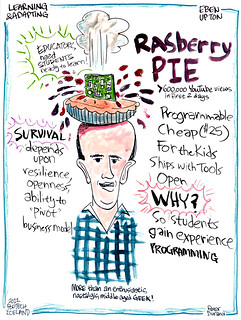
Eben Upton, founder of the Raspberry Pi Foundation, shows how he is hooking a new generation of kids on computer programming. “I remember sitting down with my wife for dinner…and we had this sudden, appalling realization that we had promised 600,000 people that we would build them a $25 dollar computer.”

Computer technology teachers have a new teaching tool that has given students the foundation for a mass of invention and innovation.

The Raspberry Pi — a circuit board the size of a credit card — has served as the starting point for computer science students to build an astonishing number of complex devices, learning the basics of programming in the process. And the cost for this incredibly small tech tool? Around $35USD. 

The small and economical computer was first developed by faculty members at the University of Cambridge in Britain who had noticed their incoming computer science students were ill-prepared for a high-tech education. They decided to build an inexpensive device that students could learn from.

The Raspberry Pi is an ultra-low cost, credit card-sized computer designed to fill a much-needed technological gap in communities that cannot afford more traditional computing hardware and to provide children around the world the opportunity to learn programming.

Learn more at www.raspberrypi.org

Amanda Ripley: Where the Smart Kids Are

peterdurand

Peter Durand is an artist, educator & visual facilitator based in Houston, Texas.

He is the founder of Alphachimp LLC, a visual facilitation company that helps clients understand and communicate complex systems visually. He is a leader in graphic facilitation and a professor at Northwestern University Pritzker School of Law.

Margrét Pála: Educating children differently

Magret Pala

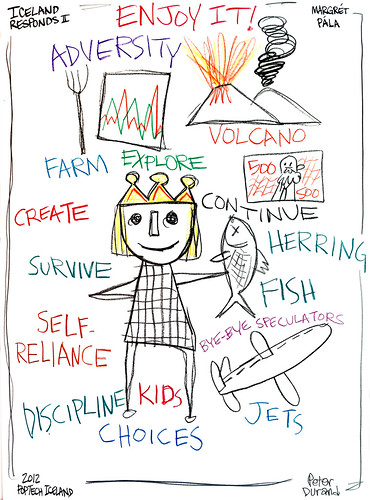
Margrét Pála is a preschool management specialist in Iceland who advocates sex-segregated classes, natural play material instead of conventional toys, and a long-forgotten belief in discipline to develop optimism, courage and resiliency in young children.

“Feel the cold! I even take them into the snow -- and then the lava. Scream a little bit! But continue! And enjoy it!”